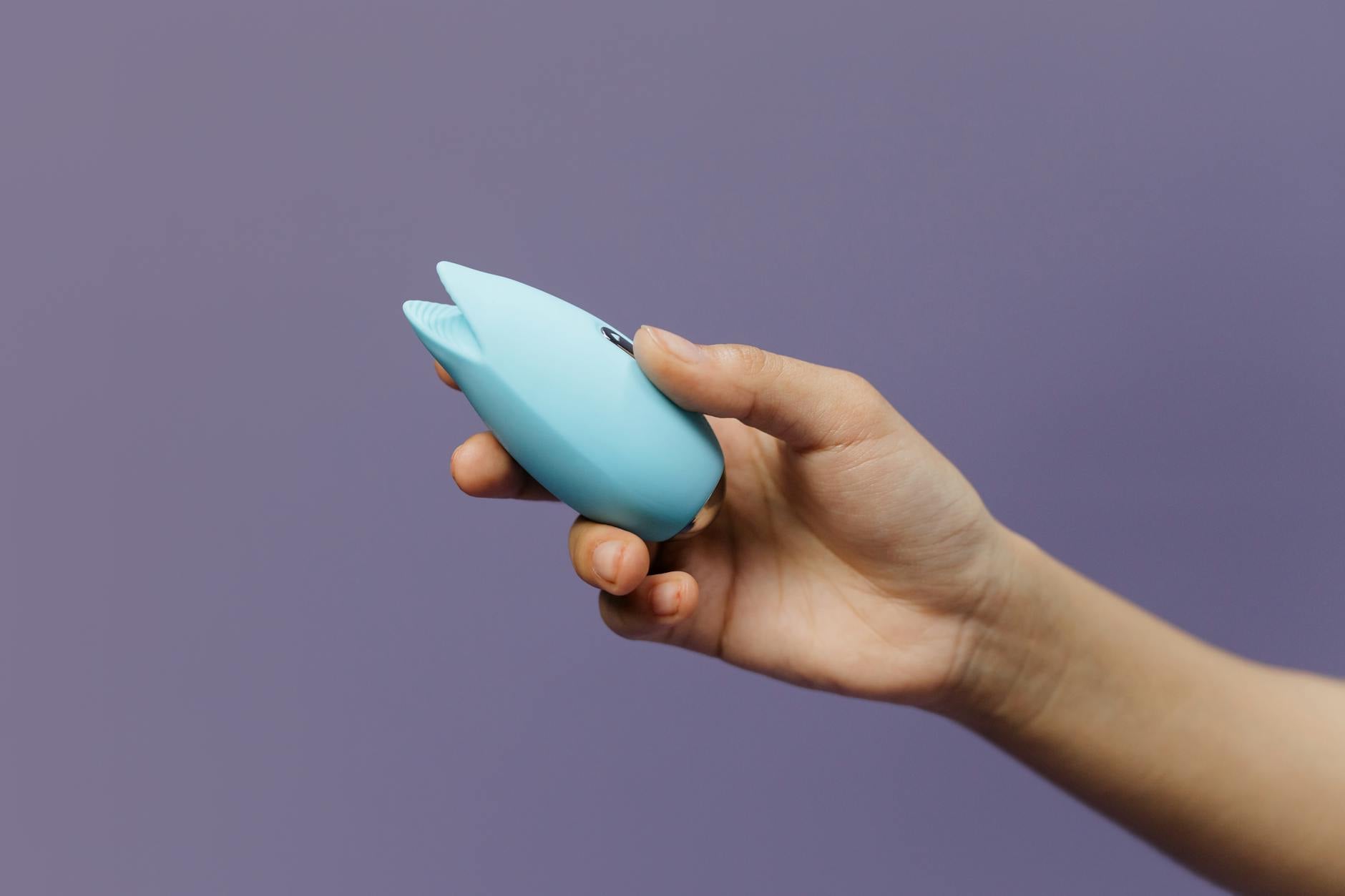
Your lemon vibrator feels completely different when you're with someone new. Not broken, not worse, just different. And if you've been expecting it to feel the same as it did solo, you're probably confused, maybe even disappointed. Here's what's actually happening.
It's not the toy. It's your nervous system. When you enter a new relationship, especially early on, your body goes into a state of heightened awareness. Your partner's presence, their touch, their breath, their unpredictability changes what you feel and how quickly you feel it. This is neurological fact, not emotional drama.
Your autonomic nervous system has two main modes: sympathetic (activation, alertness, arousal) and parasympathetic (rest, recovery, deep relaxation). Both matter for pleasure, but they work differently.
When you're alone with a lemon clitoral vibrator, you can drop into parasympathetic mode more easily. You know exactly what's coming. No surprises. Your body can fully relax, which paradoxically makes sensation more intense. Orgasms come faster. Everything feels sharper.
With a new partner in the room, even if they're not directly touching you, your sympathetic nervous system is more active. You're monitoring their movements, their reactions, whether they're watching or not, whether this is the right thing to do right now. Your clitoris is getting stimulation from the lemon vibrator, yes, but your brain is partially elsewhere. That divided attention literally dampens sensation.
This is not a personal failure. This is how mammalian bodies work. Your nervous system is designed to stay alert when there's another person present, especially someone whose signals you're still learning to read.
Three concrete things happen when you introduce a new partner:
1. Arousal takes longer to build. In solo time, you might go from zero to ready for a lemon vibrator in 5 minutes. With a new partner, even if the foreplay is hot, you might need 15 or 20 minutes. Your clitoris isn't damaged. Your nervous system just needs more convincing that it's safe to go fully into pleasure mode.
2. You feel less sensation at lower intensities. If you usually use pattern 4 or 5 on your lemon vibrator alone, you might need pattern 6 with a partner because some of your sensory bandwidth is being used for monitoring the environment. The toy isn't weaker. Your attention is divided.
3. Orgasms might feel less intense or shallower. This one feels the worst because you remember what it felt like alone. The clitoral vibrator is doing the same thing it always does, but your nervous system isn't in the same state. A deep orgasm requires parasympathetic dominance, which is harder to access with another person in the room.
Honestly though, this passes. Not because you get used to it, but because your brain learns that this person is safe.
I've worked with hundreds of couples navigating this exact feeling. The ones who move through it fastest aren't the ones with the most chemistry. They're the ones who actually talk about it.
Here's what helps: naming it. "Hey, I'm not as responsive with you here yet. That's not about you or about how I feel about you. It's just how my nervous system works with new people." Your partner hears that as honesty, not rejection. They relax. Your body notices that they're not threatened and relaxes too.
Trust is not just an emotional concept. It's a physiological state. When your body trusts that another person isn't a threat, parasympathetic mode becomes more accessible. When that happens, the clitoral sensations from your lemon vibrator sharpen again.
Some couples find that using a lemon vibrator together actually accelerates this process. There's less ambiguity. You're saying yes to sensation and pleasure right in front of them. They get to witness your body's response without guessing or performing for them.
Most people make this harder by comparing. "With my last partner, I could finish in 3 minutes with my lemon vibrator." Or "I remember feeling way more pleasure when I was single." And then they start spiraling about whether this new relationship is the right fit.
Stop. Your body isn't comparing your new partner to your ex. Your nervous system is just in a different state. These aren't the same conditions. You're not the same person in the same room with the same level of trust. Don't run a test that assumes you should be.
The person who makes this mistake most often is the one who's been single for a while and suddenly has a partner. Your nervous system has been in solo mode for months or years. Your lemon vibrator has been your predictable friend. Of course reintroducing another person changes how it feels. This is a feature, not a bug.
Listen, I know people say "just relax" like it's advice and not a punishment. Here's what actually moves the needle:
Start with the vibrator alone, with your partner present but not engaged. Meaning they're in the room, you're clothed or not, they're just there. Not watching with intensity, not doing anything sexual. This bridges the gap between solo and partnered faster than jumping straight into partnered pleasure.
Use your lemon vibrator as foreplay, not the main event. When pressure is off finishing, your nervous system can actually settle. You get stimulation, your partner gets to be close to your pleasure, nobody's watching a timer.
Talk about what you're feeling, not what you're not feeling. Don't say "I can't come." Do say "I feel more sensation when I focus. Want to help me focus?" One is a problem. The other is a collaboration.
Give it time. Three weeks in, you're still reading your partner's nervous system. Three months in, your body knows the basic pattern of their breath and movement. This is when sensation actually deepens. Not shallower, deeper. Because now you have both the direct clitoral stimulation from the lemon vibrator and the nervous system confidence that makes you able to actually feel it.
If your partner is reading this wondering what helps: touch her where the vibrator isn't. Kiss her neck, hold her waist, run your hand along her inner thigh. Let her nervous system know you're present and consensual. Don't just watch the toy do its job. Be part of the experience without trying to be the main event.
The best partners I know create what I call "safe intensity." They're calm enough that their partner's body doesn't have to monitor them for danger, but present enough that the partner feels witnessed. It's a specific equilibrium.
If you're the one using the clitoral vibrator, tell your partner what makes you feel seen versus scrutinized. Some people love being watched while using a lemon vibrator. Some people need their partner to look away sometimes so their brain can go internal. Both are normal. Just make sure your partner knows which one you are.
If a month in you're still feeling completely numb, or if you felt great sensation initially and it's recently disappeared, that's worth examining more closely. Sometimes it's not about the newness of the relationship. Sometimes it's about how you're feeling about the relationship itself.
Anxiety about the relationship will absolutely tank sensation. So will resentment, even low-level resentment you haven't fully acknowledged. If you notice the dullness correlates with a specific tension or pattern, that's worth talking through with your partner, not just trying to power through with a stronger vibrator setting.
And if you've historically had responsive sexuality and now you're struggling, it might be worth checking in with a doctor or therapist, not to shame yourself but because sometimes shifting sensation is also physical. Medication changes, thyroid stuff, even dehydration can shift how your clitoris responds to a lemon vibrator.
Your nervous system is in parasympathetic mode when you're alone. No external stimuli to monitor, no person to gauge, no unconscious threat assessment happening in your brainstem. Your whole bandwidth is available for pleasure. That deep relaxation actually amplifies sensation. With a partner present, some of that bandwidth goes to monitoring the environment and the other person's reactions.
Not even close. The dulled sensation is about your nervous system's early-stage activation, not about compatibility. People with intense chemistry often feel this strongly because both nervous systems are more activated. Couples who report less initial intensity sometimes have easier time with shared pleasure because there's less to manage neurologically. Just different, not better or worse.
Most couples report shift within 4 to 8 weeks of regular partnered intimacy. Some faster if they talk about it directly and stop performing for each other. Some take longer if there's underlying anxiety about the relationship. Trust is what moves the needle, and trust builds on its own timeline.
No. If anything, keeping up your solo pleasure practice helps you maintain the neural pathways that know how to feel deeply. The problem isn't the vibrator or how often you use it. It's the nervous system state. Solo practice actually gives you a baseline you can reference with a partner.
Yes. Proximity, touch on other parts of your body, and calm, steady presence all help your parasympathetic nervous system feel safer. But the most powerful thing is just knowing that the initial dullness is temporary and normal. Your brain stops trying to fix something that isn't broken. That alone shifts sensation.
That might be worth talking through with a therapist or sex-positive healthcare provider. Sometimes it's nervous system stuff that responds to communication or practice. Sometimes it's a sign of relationship ambivalence or past sexual trauma that needs actual support. A lemon vibrator is a great tool, but it's not a diagnostic device. Your body's response is information, not failure.
Your lemon vibrator isn't defective. Your body isn't broken. You're just in a different nervous system state than you were alone. That state changes. Your sensation deepens. Your trust builds. What feels duller now becomes richer with time. Let yourself have that timeline instead of fighting it.