Here's what changes, and what doesn't
Menopause rewires pleasure, but it doesn't end it. The estrogen drop is real. Tissue gets thinner, lubrication shifts, and yes, the pelvic floor loses some of its elastic support. But the neural pathways for arousal, the clitoral nerve density, and your brain's capacity for intense orgasm. Those stay exactly the same.
I've worked with hundreds of clients through this transition, and here's what I've learned: many report their most satisfying orgasms happen after menopause. That's not a polite lie. It's a clinical pattern that shows up again and again in my practice.

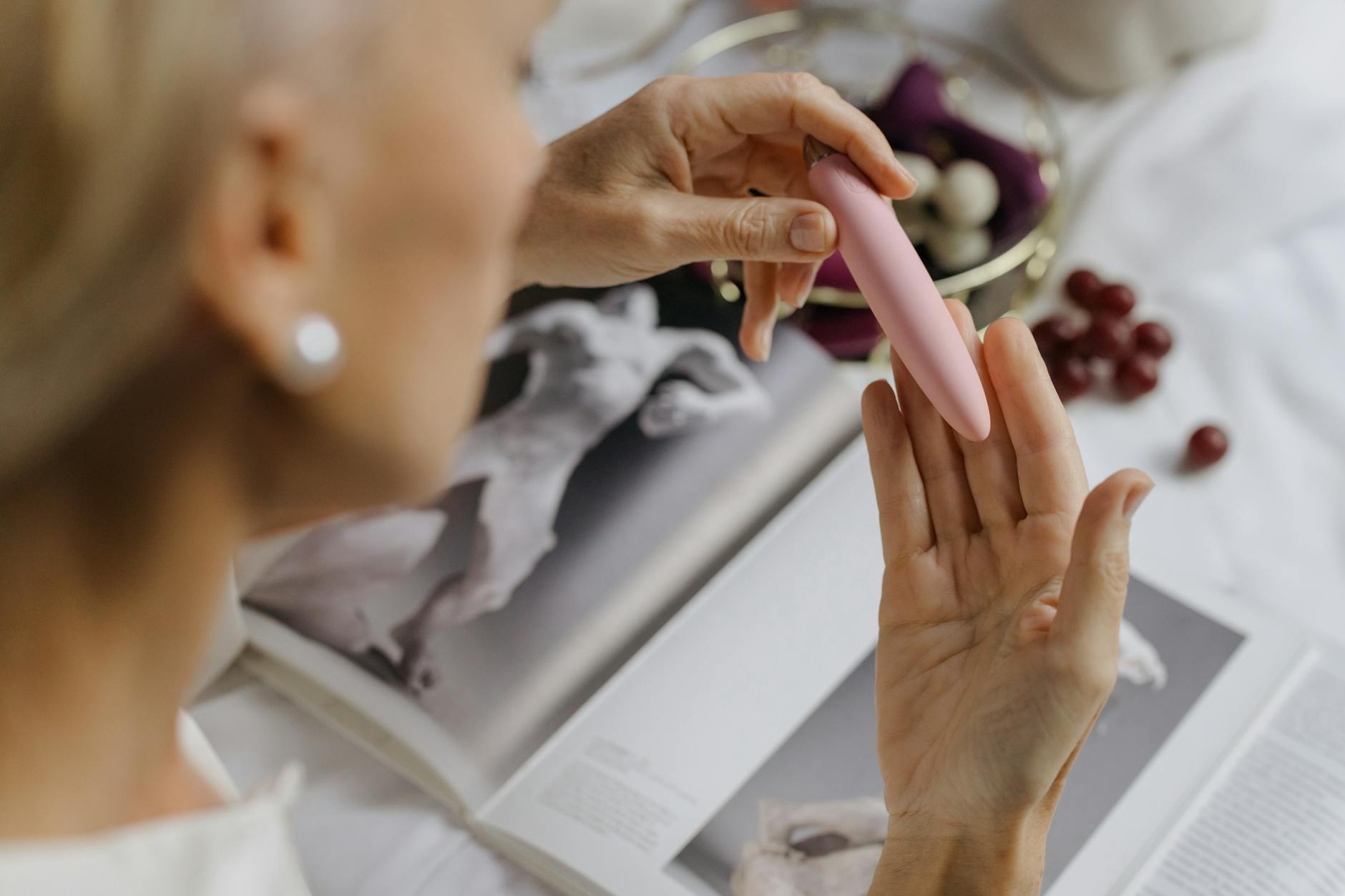
Photo by cottonbro studio on Pexels
Why lemon vibrators are especially suited for post-menopausal bodies
Traditional vibrators rely on direct, repetitive friction. When tissue is thinner or more sensitive post-menopause, that constant hammering can feel irritating rather than pleasurable. Lemon clitoral vibrators and other suction-based devices work completely differently.
They use gentle air-pulse stimulation to create a rhythmic suction effect around the clitoral area. Instead of friction, you get waves of pressure that stimulate the entire clitoral complex, including the internal branches that extend deep into the body. This matters enormously after menopause because it gives your body the stimulation it craves without the mechanical intensity that thinner tissue finds uncomfortable.
The other advantage: lemon vibrators have a learning curve that's incredibly forgiving. You start at the lowest setting, and most people find satisfaction there. If you want more, the patterns build gradually. There's no need to turn up the intensity to compensate for reduced sensation. The design does the work for you.
The physical shifts you're actually experiencing
When estrogen drops, three main things happen below the surface.
Tissue thickness decreases. The vaginal walls and vulva contain collagen and elastin, both estrogen-dependent. As estrogen falls, these tissues thin out. This isn't degradation. It's a normal, manageable shift. Water-based lubricant handles it beautifully.
Natural lubrication changes. Some post-menopausal people produce less fluid. Others find it shifts in consistency. Thinner, less acidic lubrication is what you might notice. Again, this is manageable with external lube, and many people find that once they use it, sensation improves rather than diminishes.
The pelvic floor loses support. Estrogen receptors exist throughout the pelvic floor muscles. When estrogen drops, these muscles have less structural reinforcement. Orgasms sometimes feel different, not necessarily worse. Some people report more localized, intense sensations. Others find them wider and more diffuse. The variation is huge.
What does NOT change: the clitoral nerve density, the spinal pathways for arousal, or the brain's ability to experience pleasure. Full stop.
How to adapt your lemon vibrator practice for post-menopausal tissue
Four practical adjustments make an enormous difference.
Start lower than you think you need. If you're used to a traditional vibrator set to medium or high, lemon vibrators deliver that stimulation at pattern 1 or 2. The air-pulse technology is efficient. There's no waste. Spend two to three sessions at the lowest setting, even if it feels timid. Your body will recalibrate to this new sensation, and you'll discover pleasure in subtlety that you might not have expected.
Lubricate generously. Use a water-based lubricant, always. Silicone-based lubes feel luxurious, but they damage silicone toys, and many lemon clitoral vibrators are made of silicone. Water-based feels less rich initially, but it works beautifully with the suction effect. Apply it to the toy and to your body. More is better. The goal is smooth glide and no friction.
Budget time for warm-up. Post-menopause, arousal takes longer to build. This isn't dysfunction. It's your nervous system asking for more runway. Spend 15 to 25 minutes on foreplay, breathing, and mental engagement before you reach for your lemon vibrator. That buildup dramatically changes the experience.
Practice pelvic floor release, not just contraction. Most people think of Kegels, which are pelvic floor contractions. That's useful, but post-menopause, the ability to fully relax the pelvic floor becomes harder and more important. A tight pelvic floor blocks sensation and can make orgasm harder to reach. Spend time learning to soften that space. Breathe into it. Imagine releasing instead of gripping.
Why the mental stuff matters more now
Here's where I see the biggest divide. People assume the changes they're experiencing are purely hormonal. Often, they're layered.
Menopause arrives alongside other transitions. If you have adult children, you might be navigating the shift in parental identity. A relationship might be changing shape. Work stress fluctuates. Grief appears. These things don't show up as hormonal, but they absolutely affect desire and arousal.
I often ask clients to separate two conversations: "My body is responding differently" and "I want more intimacy in my relationship." Conflating them creates confusion. One is physiological. The other is relational. A lemon vibrator helps with the first. Honest conversation helps with the second.
If you have a partner, the most valuable thing you can do is be honest about what's changing. You're not broken. Your pleasure isn't over. You're moving into a new chapter. Most partners respond beautifully to clarity.
When to seek professional support
If penetrative sex becomes painful, don't normalize it. Genitourinary syndrome of menopause, or GSM, is real and easily treatable. A menopause-trained gynecologist can prescribe topical estrogen creams that have minimal systemic absorption and transform the experience in weeks.
If desire has completely evaporated and isn't coming back, testosterone therapy is worth discussing with a doctor who specializes in menopause. It's prescribed conservatively in many places, but it's a legitimate option and often life-changing.
If sensation feels completely absent even with stimulation, you might explore whether it's a tissue issue, a medication side effect, or something else. How Lemon Vibrators Can Improve Pleasure After Medication Changes walks through that territory in depth.
The pleasure that comes after
Here's what I've observed across decades of clinical work: many people experience their most satisfying intimacy in their 50s and 60s. The reasons are predictable and actually logical.
First, the mental load of fertility and hormonal cycling lifts. That cognitive space frees up energy for your own pleasure. Second, the cultural pressure to perform diminishes. Post-menopausal bodies aren't expected to be young or to function on someone else's timeline. That permission is enormous. Third, people often have more experience with their own bodies and feel less self-conscious exploring them.
A lemon clitoral vibrator in this context becomes a tool for reclaiming pleasure on your own terms. Not as a workaround for dysfunction, but as an honest response to how your body is now.
Frequently asked questions
Can lemon vibrators actually help with dryness caused by menopause?
Lemon vibrators don't produce lubrication, but they stimulate blood flow to the clitoral area and surrounding tissues. Increased blood flow often improves natural lubrication slightly. The real help comes from pairing the vibrator with a good water-based lubricant. Together, they create the conditions for comfortable, sustained pleasure.
Is reduced sensation after menopause permanent?
Not entirely. Some changes persist, yes. But many post-menopausal people find that with patience, consistent stimulation, and good lube, sensation normalizes within a few months. Your nervous system adapts. Lemon vibrators work well here because they stimulate a wide area of nerve endings without harsh friction.
How often should I use a lemon vibrator after menopause?
There's no magic number. Some people use them weekly. Others daily. The key is consistency. Regular stimulation keeps blood flow strong and nerves responsive. Think of it like exercise. Consistency matters more than intensity. If you're noticing reduced sensation, more frequent use often helps wake things up.
Will using a lemon vibrator interfere with partnered intimacy?
Not if you approach it honestly. If anything, solo practice with a lemon vibrator teaches you what actually feels good now. That knowledge makes partnered sex clearer and more satisfying. Many couples find that one partner using a vibrator during shared intimacy deepens connection rather than complicating it.
Do I need to adjust lubrication if I'm already on hormone replacement therapy?
Maybe, maybe not. HRT can reduce the need for external lube, but it doesn't always restore it completely. Individual variation is huge. Some people on HRT need no additional lubricant. Others still appreciate it. Use your body as the guide. If things feel smooth and comfortable, you're fine. If there's any drag or discomfort, add lube. It's not a failure of HRT. It's just accommodation.
Can I use the same lemon vibrator at different life stages, or do I need to replace it?
One vibrator can work across seasons of your life. What changes is how you use it. Pre-menopause, you might prefer a certain pattern and intensity. Post-menopause, you might live on a lower setting with more generous lubrication. That's not the toy failing. That's you getting smarter about what actually works. A good lemon clitoral vibrator is built to last and adapt.
The conversation keeps evolving
Menopause is not the end of your sexual life. It's the middle chapter, and honestly, often the most interesting one. Your body is changing, yes. But change isn't the same as loss.
The lemon clitoral vibrators that work so well for post-menopausal pleasure do so because they're designed with physiology in mind. They stimulate without demanding. They adapt to lower-intensity preference. They work beautifully with lubrication rather than against it.
If you're navigating this shift and feeling uncertain, you're not alone. Thousands of people move through menopause each year and discover that pleasure doesn't end. It deepens. It becomes more intentional. It becomes yours in a way it might not have been before.
Ready to explore? Reach out to us with any questions about getting started with a lemon vibrator, or browse our full collection to find what fits your body and your moment.