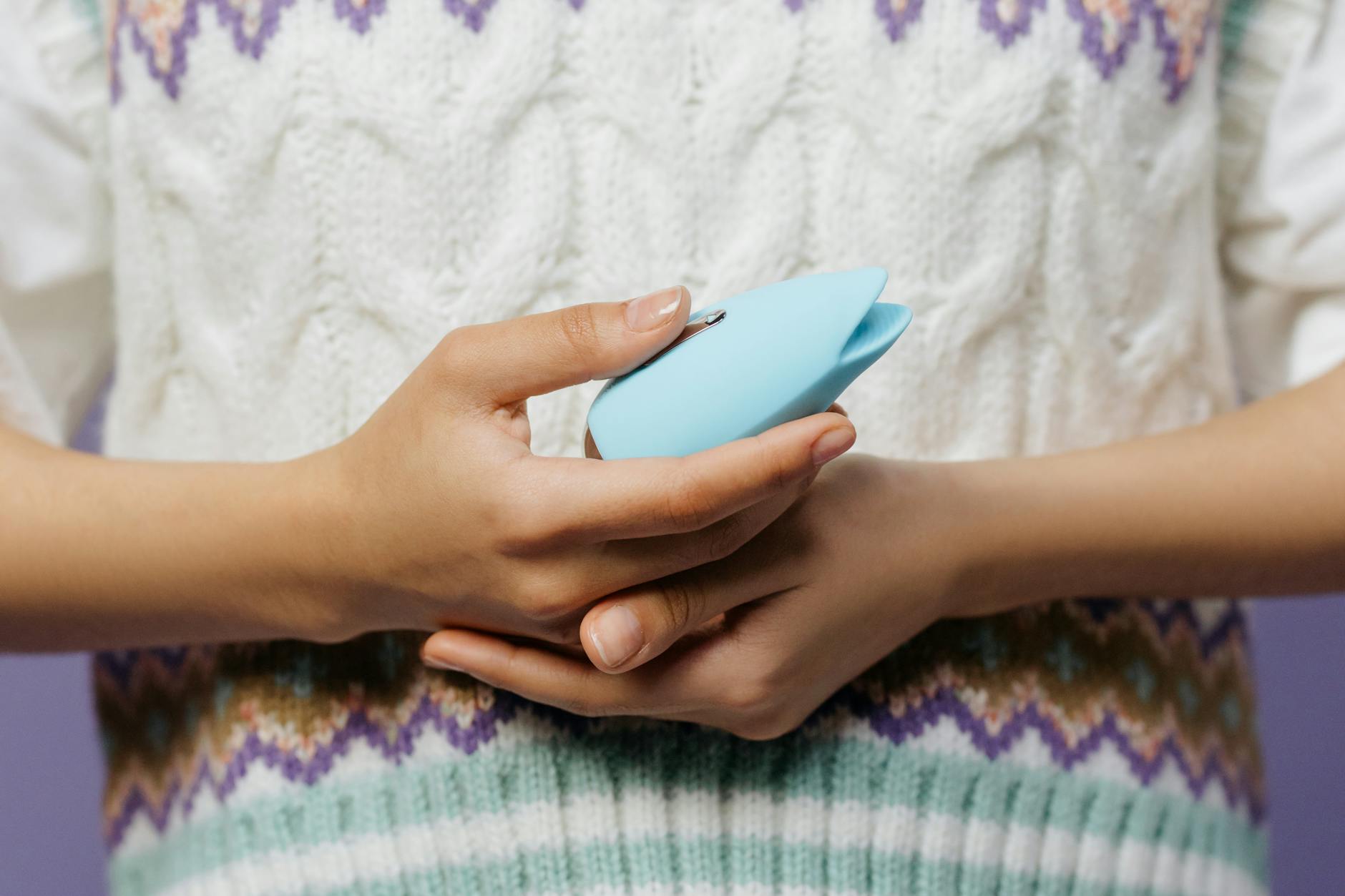
Let's talk about the sensation you're avoiding
You bought a lemon clitoral vibrator. You've heard the hype. You tried it. And then. Too much. Like, uncomfortably too much. Your nervous system basically noped out, your body tightened up, and you put the thing away.
Here's what nobody tells you: that reaction is not a personal failure. It's feedback. Your body is telling you something real about your current sensory threshold, and that information is useful.
Overstimulation happens for lots of reasons. Stress, hormones, previous negative experiences, or sometimes just because you're more sensitive than the cultural "normal" that sex toy marketing assumes. That last one is worth sitting with. Clitoral vibrators are designed to feel intense by default. Not everyone needs or wants that intensity. Many people don't.
Why intensity can feel like the wrong kind of sensation
Let me separate a few things that often get lumped together. There's pleasure. There's intensity. There's overstimulation. They're not the same.
Pleasure is what you're after. It should feel good. Your brain should be involved, your breath should deepen, you should want more.
Intensity is just... a lot of it. Strong vibration. Rapid pulses. High frequency. It's a dial, not a requirement.
Overstimulation is when the sensation crosses past pleasure into discomfort, numbness, or that jangling sensation like someone's overstimulating a nerve. Your clitoris can actually go numb if the vibration is too intense or sustained. This is called desensitization, and it happens because the nerves stop firing clearly when they're hammered with constant high-frequency input.
Here's the thing: lemon vibrators come with a reason for existing. They're designed to feel really good. But "really good" doesn't mean "maximum possible intensity." That's a marketing choice, not a biological law.
The physiology behind "too much"
Your clitoris has about 8,000 nerve endings packed into a tiny area. That's concentration. That's sensitivity. When you turn up the intensity too high, you're not adding pleasure. You're just adding volume.
Think about sound. A whisper at the right moment can be more powerful than screaming. The clitoris works the same way.
There's also a nervous system component. When you're stressed, anxious, or in a state of hypervigilance, your sympathetic nervous system is already activated. Your body interprets intense sensation as threat. Your pelvic floor tightens. Your arousal shuts down. This is not something you can think your way out of. It's a physiological response.
If you're dealing with anxiety, past trauma, or chronic stress, starting with lower intensity and building slowly gives your nervous system time to recognize safety.
How to find your actual threshold
Three steps, done over a few sessions.
Step 1: Start stupidly low. Not just pattern 1 on the lemon vibrator. Actually go lower. If your device has a range, start at 20% of its maximum. Feel the sensation. It should feel present but gentle. Curious, not overwhelming. Spend a few minutes here. Let your body acclimate.
Step 2: Increase gradually in tiny increments. Once that level feels comfortable and pleasurable (this usually takes 2-3 minutes), bump it up maybe 10%. Stay there. Notice what shifts. Is the pleasure increasing? Or is it just getting noisier?
Step 3: Find the peak, then back off slightly. Keep bumping up until you hit the point where it stops feeling good. That's your ceiling. Now dial it back about 15%. That's your working zone. That's where the actual pleasure lives for you.
This might be pattern 2 on a lemon vibrator. It might be pattern 4. There's no right answer. Your answer is the one where you want to stay, not the one where you're white-knuckling through it.
Practical strategies for managing intensity
If you're using a lemon clitoral vibrator or any strong toy and finding it too much, these tweaks help.
Use a barrier. Fabric between your skin and the vibrator reduces intensity without reducing pleasure. A thin cotton cloth, your underwear, even your hand. The vibration still reaches you, but it's softened. This is wildly underused and wildly effective.
Change positioning. Indirect stimulation is less intense than direct. If you're pressing the vibrator directly on your clitoris, try moving it slightly to the side, or above, so you're feeling vibration to the clitoral area rather than the exact point. You might find that's actually more pleasurable because the sensation spreads instead of concentrating.
Reduce contact surface. If your toy has a wide head, try using just the edge of it instead of the whole surface. Smaller contact area means sensation doesn't overwhelm as easily.
Shorten duration. You don't need to sustain this for 20 minutes. Pleasure isn't about time. It's about quality. Three minutes of actual enjoyment beats ten minutes of enduring something.
Lubrication matters. A high-quality water-based lubricant can change the whole experience. It reduces friction, which can make vibration feel smoother and less jarring. Some people find that a good lube actually lets them access more pleasure at lower intensities because the sensation is less chaotic.
When to bring your partner into this
If you have a partner, there's often shame folded into this conversation. Like you're supposed to want maximum intensity because that's what sex toys are "for." That's not how any of this works.
Tell them what you've discovered. "I'm finding that lower intensity actually feels better to me." Or "I need to start really slow and build up." Or "I want to use this with a barrier because that changes how it feels in a way I like better."
A partner worth having will care that you feel good, not that you hit some arbitrary intensity level. Using a lemon clitoral vibrator should enhance the experience for both of you. If one person is uncomfortable, you're both less present. If both people are engaged and pleased, that's the whole goal.
If your partner is pushing you toward intensity you don't want, that's worth addressing outside the bedroom first. How Lemon Vibrators Work With Your Nervous System During Stress or Anxiety covers some of that dynamic.
Sensory sensitivity is not a flaw
Cultural messaging around sexuality often frames sensitivity as something to overcome. Like your body should be able to take anything. That's not accurate.
Sensitivity is information. It's actually a sign that your nervous system is working properly. People with high sensory sensitivity often experience pleasure more acutely when the conditions are right. They're not less capable of pleasure. They're just more attuned to it.
Many people find that how Lemon Vibrators improve pleasure during hormonal transitions reveals that sensitivity shifts. You might be fine with intensity at one point in your cycle, and overwhelmed by it two weeks later. That's normal.
The goal is to use tools like lemon sexual toys in a way that meets you where you actually are right now. Not where you think you should be. Not where marketing says you should be. Where you actually are.
When overstimulation is worth investigating further
If low-intensity sensation still feels overwhelmingly uncomfortable, or if you're experiencing numbness even at gentle levels, it's worth checking a few things.
First, your stress and nervous system state. Are you using the vibrator while you're tense or distracted? It's really hard for your body to access pleasure when you're not physically relaxed. Budget actual time. Dim the lights. Put your phone away.
Second, past trauma. If you have a history of sexual assault or abuse, sometimes genital stimulation can feel intrusive even when you logically want it. A trauma-informed therapist can help you work through that. There's no rush. Healing happens at its own pace.
Third, hormonal shifts. Estrogen affects tissue thickness and nerve sensitivity. If your sensitivity has changed recently, hormonal shifts might be the reason. This is especially true if you're approaching or in perimenopause.
If none of that resonates, you might just be someone who prefers gentler stimulation. That's fine. Lemon adult toys come in different intensities and patterns. You'll find the one that fits you.
FAQ
Is there something wrong with my clitoris if vibration feels too intense?
No. Sensitivity is a normal variation in human bodies. Some people have more sensitive nerve endings in the clitoral area. Some people's nervous systems are more reactive to strong sensation. Neither of these is wrong. They're just information about your body. Use that information to choose stimulation that actually feels good instead of assuming you need to adapt to whatever intensity the toy defaults to.
Can I permanently desensitize my clitoris by overstimulating it?
Not permanently, but temporary desensitization is real. If you use a high-intensity vibrator for extended periods, your nerve endings might stop firing clearly for a while. This feels like numbness or like the sensation is "gone." It usually recovers within 24 to 48 hours with rest. To avoid it, keep sessions shorter and intensity lower. The irony is that people often think they need more intensity because they're not feeling anything. Usually it's the opposite. The intensity is so high that your nerves have checked out.
What if my partner thinks I should want more intensity?
That's a conversation to have outside the context of sex. Partners sometimes equate intensity with passion or assume that wanting less stimulation means you want less of them. Neither is true. You can be incredibly turned on and present while using lower intensity. Pleasure isn't a volume dial. It's a tuning dial. You're looking for the frequency that resonates with you, not the loudest possible output.
Does starting low-intensity mean I won't ever enjoy strong sensation?
Not necessarily. Building up gradually often means your nervous system stays engaged the whole time instead of checking out. You might find that you can actually tolerate and enjoy higher intensity if you approach it slowly and only increase when your body is ready. Slow doesn't mean you can't go deep. It means you're listening while you do.
Are lemon vibrators less effective at lower intensities?
No. The technology is the same. Lower intensity still means vibration, still stimulates nerve endings, still creates pleasure. It's just softer. Some people have their most powerful orgasms at low intensity because their nervous system is relaxed and responsive instead of braced for impact.
Should I use the same low intensity with a partner or solo?
It depends. Some people are comfortable with different intensities depending on context. With a partner, you might want to communicate about it each time because arousal and comfort shift. Solo, you can experiment without worrying about anyone else's expectations. Neither approach is wrong.
The actual takeaway
Lemon vibrators are tools. They should work for you, not the other way around. If intensity feels overwhelming, you're not broken. You're just accurate about what your body needs right now. Listen to that. Start low. Build slowly. Find the frequency that makes you want to stay, not the one that makes you want to escape. That's where the real pleasure is.
If you want to explore more about how your body responds to different approaches, reach out. Sometimes talking through your specific situation with someone who understands both pleasure and bodies makes the whole picture clearer.