Let's talk about what actually happens
Hormonal transitions don't kill pleasure. They change it. That's an important distinction, because it means you're not broken. You're not less capable. You're working with a different set of physical and chemical conditions, and once you understand that, you can adapt your approach.
Every month, every year, every life phase brings hormonal shifts. Some are obvious (menstrual cycle, perimenopause, postpartum). Others sneak up quietly (stopping birth control, medication changes, thyroid shifts). The nervous system responds to all of it. Tissue responds to all of it. Arousal patterns respond to all of it.
How hormones actually affect sensation
Estrogen, progesterone, and testosterone all influence how pleasure works. When estrogen drops, vaginal and clitoral tissue becomes thinner and drier. This isn't failure. It's just biology. The consequence is that direct friction stimulation can feel overwhelming or even painful, while other types of stimulation become more enjoyable.
Progesterone peaks at a different part of your cycle and makes arousal feel slower to build. Testosterone, which people with ovaries produce in smaller amounts than those with testes but in significant quantities, directly affects desire and the intensity of sensation. When testosterone fluctuates, so does the whole pleasure experience.
Here's what doesn't change: your clitoral nerve density stays the same. Your capacity for orgasm doesn't disappear. Your brain's pleasure pathways don't get rewired. You're not less sexual. You're responding to different chemical conditions.
Why suction-based stimulation works during transitions
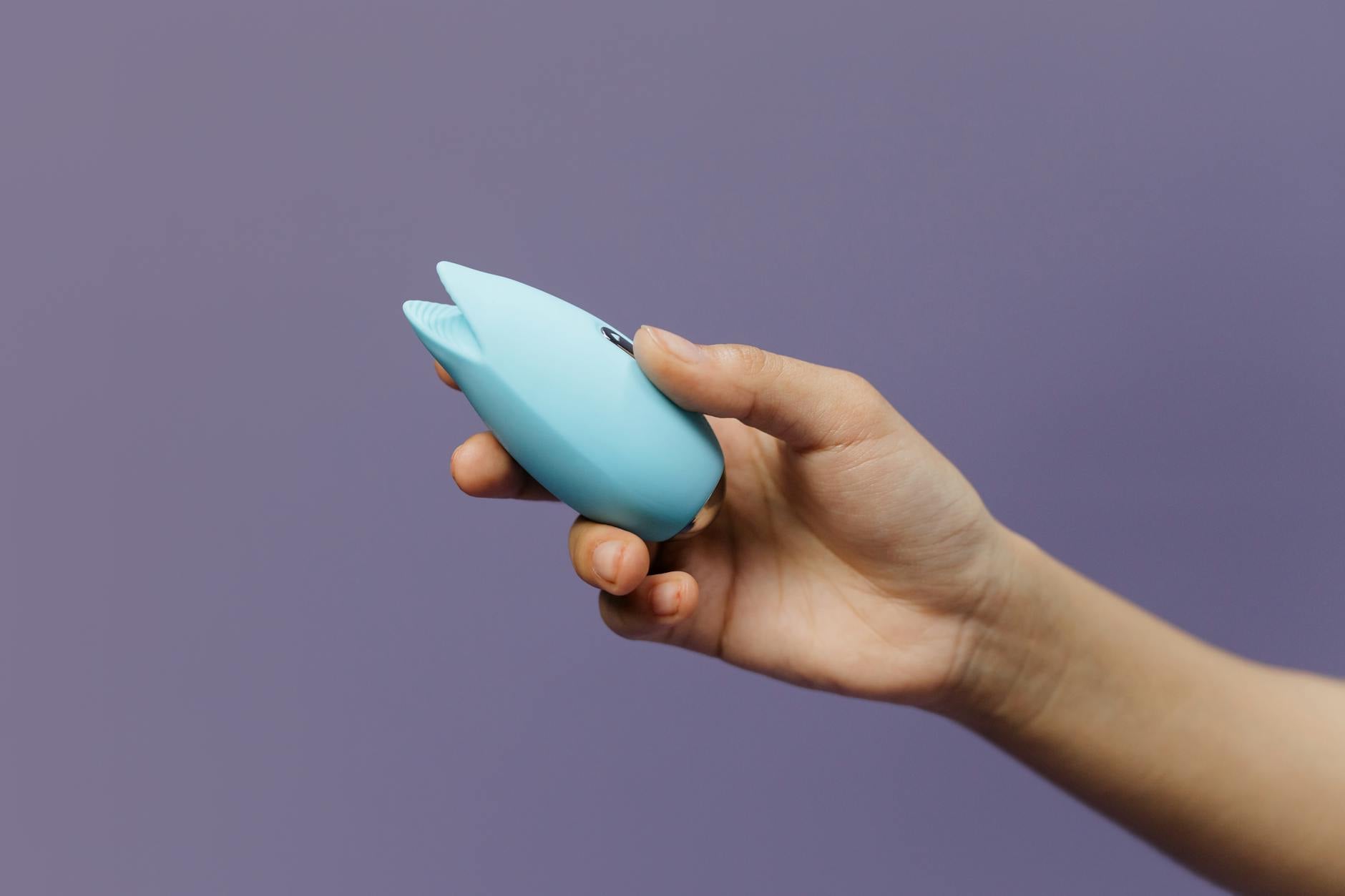
This is where lemon clitoral vibrators shine. Air-suction technology, like what the Lem and other clitoral suckers use, works beautifully during hormonal shifts for one core reason. It stimulates nerves without requiring the same kind of sustained friction that can irritate thinner tissue.
When you're in a low-estrogen phase, direct vibration can feel too intense or create soreness. Suction provides broad, rhythmic stimulation that builds arousal gradually and feels gentler on sensitive tissue. Many people find that during these transitions, suction-based pleasure feels more satisfying than traditional vibration alone.
The pattern matters too. Lemon vibrators offer multiple intensity levels. During hormonal transitions, starting on lower patterns and building up works better than jumping straight to maximum intensity. Your nervous system has more time to respond, and arousal builds more naturally.
The timing question: when does pleasure change most
If you menstruate, you probably notice that arousal and sensation vary across your cycle. In the follicular phase (after your period, before ovulation), estrogen is rising and arousal tends to build more easily. In the luteal phase (after ovulation), progesterone rises and arousal often requires more patience and warm-up time.
During perimenopause, these patterns get messier. You might experience weeks where sensation feels numb, followed by weeks where it feels oversensitive. Using a lemon clitoral vibrator with adjustable intensity helps you adapt to these shifts without abandoning pleasure entirely.
The same is true for postpartum recovery. Hormones drop dramatically after birth. Prolactin rises if you're breastfeeding. For weeks or months, pleasure can feel distant or require much longer warm-up time. Suction-based vibrators create space for that process without demanding more than your body has available.
What to do differently during transitions
Three practical shifts matter:
Start lower and slower. If you usually use pattern 3 on a lemon vibrator, drop to pattern 1 during a hormonal transition. Your body isn't weaker. It's more sensitive to stimulation because tissue is thinner or because your nervous system is processing different hormone levels. Respecting that matters.
Budget more warm-up time. Arousal takes longer to build when progesterone is high or when estrogen is low. Instead of assuming you have five minutes to get ready, give yourself fifteen or twenty. Light touch, breathing, whatever helps your nervous system settle in. Then introduce the lemon clitoral vibrator.
Use water-based lubrication consistently. You've probably heard this before, but it becomes non-negotiable during hormonal transitions. Thinner tissue dries faster. Lube isn't a sign that something's wrong. It's a tool that makes sensation better.
The emotional layer you can't skip
Hormonal transitions often arrive with other life shifts. If you're in perimenopause, you might be managing changing relationships with your partner, shifts at work, or grief about aging. If you're postpartum, you're sleep-deprived and touching a baby all day and might feel touched-out.
When pleasure feels distant, it's tempting to blame hormones alone. Sometimes they're not the only factor. Sometimes the friction in your body isn't physiological. It's relational, or it's about identity, or it's just exhaustion.
This is why talking matters. If you have a partner, naming what's happening ("My body is responding differently right now") is different from assuming they did something wrong or that you broke. If you're solo, the conversation is with yourself. Permission to adjust. Permission to take longer. Permission to explore what works now instead of what worked before.
If pleasure has completely disappeared and it's been months, or if sex has become painful, talk to a menopause-trained provider. Genitourinary syndrome of menopause is real and treatable. Hormone-responsive tissue changes are manageable. You don't have to accept pain or numbness as permanent.
When to reach out for support
You deserve to feel good in your body during transitions. That's not selfish. That's not shallow. Pleasure is a marker of nervous system health, relationship health, and self-connection. When it changes, addressing it matters.
If you're navigating a hormonal transition and pleasure feels confusing or difficult, reach out. Get Lemon Adult Toys exists to make pleasure accessible during all phases of life, and the team can help you figure out what approach works for your body right now.
Many people discover that their most satisfying pleasure comes during or after hormonal transitions, when they've learned to listen to their body and adapted their approach. You're not losing pleasure. You're entering a new chapter of it.
People also ask
Can you still have orgasms during hormonal transitions?
Absolutely. The neural pathways for orgasm don't disappear during hormonal shifts. What changes is often how quickly arousal builds and how the orgasm itself feels. Some people find orgasms feel more concentrated or differently textured. Some find they need longer warm-up time. None of that means orgasm is impossible. It means your body is responding to different conditions.
Why do lemon vibrators work better than regular vibrators during perimenopause?
Lemon clitoral vibrators use suction-based stimulation instead of direct friction. During perimenopause, when tissue can be thinner and more sensitive, suction provides broad rhythmic stimulation that feels less intense while still being highly effective. The pattern options let you start gently and build, which works better when arousal takes longer to develop. You're working with your body instead of against it.
How long does it take for pleasure to feel normal again after hormonal changes?
It depends on the transition. After stopping hormonal birth control, some people feel different for a few months while their natural cycle reestablishes. During perimenopause, changes might span years as hormones gradually shift. Postpartum, most people feel somewhat more like themselves sexually after six to twelve weeks, though full recovery can take longer. The good news is that adaptation happens faster when you're using the right tools and giving yourself permission to adjust.
Is it normal to need more lubrication during hormonal transitions?
Completely normal. Estrogen supports vaginal lubrication. When estrogen drops, natural lubrication decreases. This isn't a personal failure. It's how bodies work. Using water-based lube during transitions isn't a workaround. It's smart physiology. Many people continue using lube during low-estrogen phases and find sex feels better with it.
Can hormonal transitions affect desire as much as sensation?
Yes, often more. Testosterone drives desire, and it fluctuates across your cycle and through major life transitions. Progesterone can also influence how much you want sex. If you're noticing that you want sex less frequently during a hormonal transition, that's not necessarily a sign something's wrong with your relationship. It's worth talking to a provider, especially if the change is sudden or distressing. Testosterone therapy exists and can help if that's what you need.
What should I do if pleasure becomes painful during a hormonal transition?
Don't wait. Painful sex during hormonal transitions (especially menopause or postpartum) is usually very treatable. Talk to a menopause-trained gynecologist or a pelvic floor physical therapist. Topical estrogen creams, pelvic floor work, and sometimes systemic hormone therapy can make a huge difference. Pain is a signal to get support, not a sign that you need to accept it.
The bottom line
Your body isn't broken during hormonal transitions. It's different. Once you understand how hormones shift sensation, arousal, and tissue health, you can adapt your approach to pleasure. Lemon clitoral vibrators, with their suction-based technology and adjustable intensity, are specifically designed to work with these changes rather than against them.
If you're in a hormonal transition and pleasure feels confusing, give yourself permission to explore what works now. That might mean longer warm-up time, gentler initial stimulation, more lubrication, or a different tool entirely. Your pleasure matters during every phase of life. You deserve an experience that feels good in your body right now.
If you're feeling stuck or if pleasure has become painful or absent, reach out to Get Lemon Adult Toys or talk to a provider who specializes in hormonal transitions. You don't have to navigate this alone, and you don't have to accept diminished pleasure as inevitable. Pleasure is possible. You just might need to approach it differently.