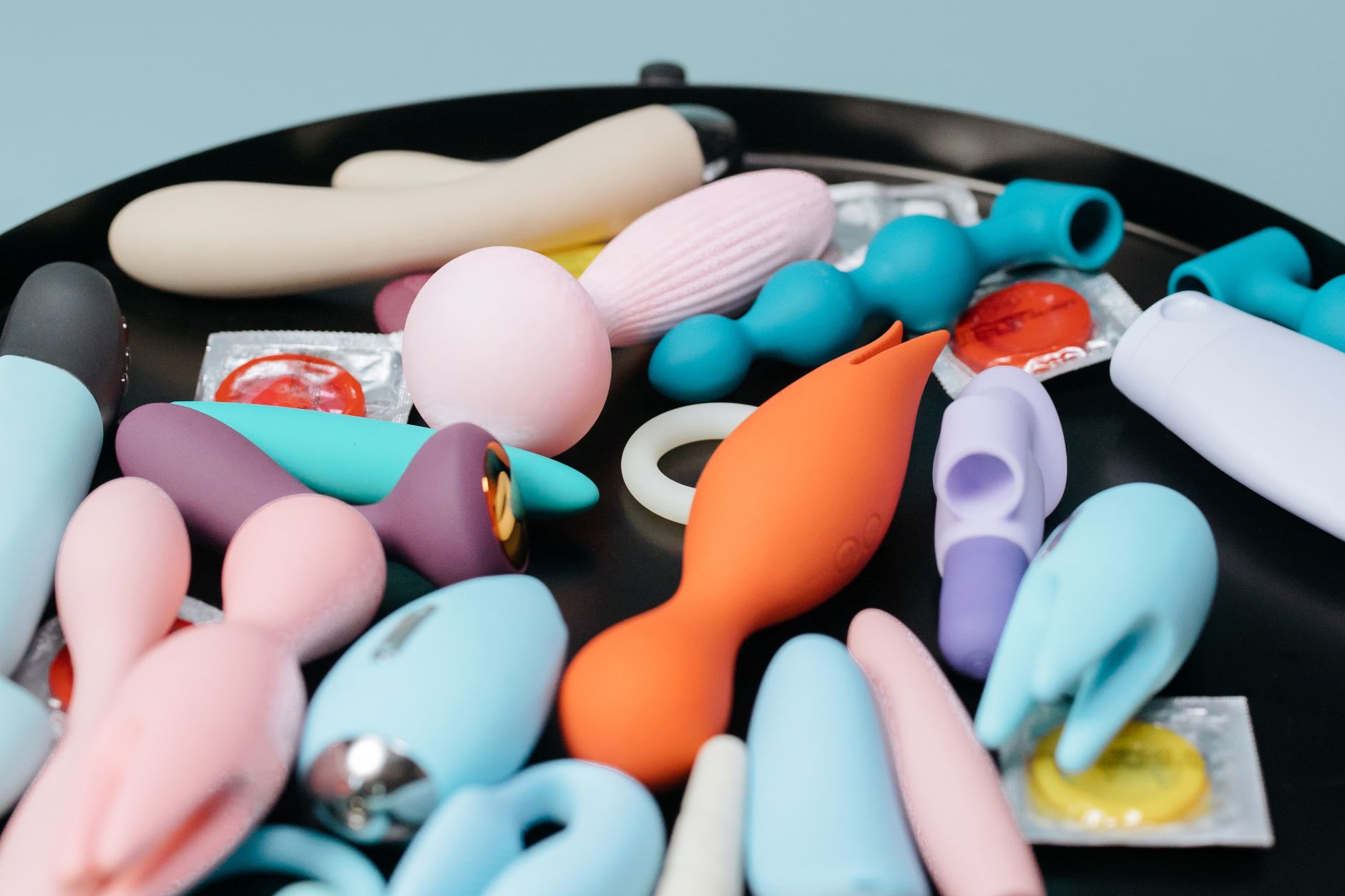
Let's be real. A lot of vibrators are made from materials that feel fine for a few minutes and then leave your skin red, itchy, or irritated for hours after. That's not a personal problem. That's a material problem. And it's more common than anyone admits because most brands don't talk about what their toys are actually made from.
If you have sensitive skin, reactive skin, or known allergies to latex, fragrance, or certain plastics, the actual composition of your toy is the difference between pleasure and regret. Lemon vibrators are engineered specifically to avoid the worst offenders.
Here's the thing about cheap silicone and rubber compounds: they're not all the same. A vibrator labeled "silicone" might contain fillers, plasticizers, and dyes that leach into your skin over time. Porous materials like rubber and TPE (thermoplastic elastomer) trap bacteria, lube residue, and manufacturing contaminants that your skin then has to react to.
Latex is the old standard. It's been used in sex toys for decades because it's cheap and flexible. But it's also a known allergen for about 3 percent of the population, and even if you're not allergic, latex can irritate skin that's already sensitized from other causes (like eczema or hormonal fluctuations that make you more reactive).
PVC is another problem material. It off-gasses phthalates, which are plasticizers that soften the plastic. Those chemicals migrate into the air and your skin, and there's no way to clean them out. Once it's in the material, it stays there.
Then there's fragrance. Some manufacturers add vanilla scent or "fresh" notes to their toys. That's completely unnecessary and it's a direct irritant for anyone with fragrance sensitivity.
Get Lemon Adult Toys uses medical-grade silicone, full stop. Not silicone blend, not silicone-coated rubber. Medical-grade means it's manufactured to FDA standards, free of phthalates, BPA, and latex. It's non-porous, which means bacteria and lube can't get trapped in microscopic pores.
Medical-grade silicone is what they use for catheters, prosthetics, and implantable devices. It's literally designed to be safe against human tissue for extended periods. That's the bar we're talking about here.
Lemon vibrators come with zero fragrance, zero dyes (unless you choose a colored model, and those are dyed using skin-safe pigments, not industrial dyes), and zero hidden additives. The silicone is smooth, non-porous, and genuinely inert. Your skin doesn't have to process anything.
Here's something that changed the way I think about toy materials: porous toys can harbor bacteria even after you wash them. Silicone is non-porous, meaning bacteria can't colonize inside the material itself. You wash it, it's clean. With rubber or TPE, you're washing the surface, but bacteria can still be living in microscopic pits you can't see or reach.
For people with sensitive skin, that matters because your skin's microbiome is already working overtime trying to maintain balance. Add hidden bacteria to the equation and you're basically guaranteed irritation.
Non-porous silicone also means you can use any lube you want without worrying about the toy absorbing and degrading. With porous materials, you have to use water-based lube only, or the toy breaks down. That's another hidden restriction that doesn't exist with lemon vibrators.
Silicone holds temperature differently than rubber or plastic. It doesn't off-gas heat or cold the way metal or certain plastics do. For people whose skin reacts to temperature changes (which is more common than you'd think, especially if you have rosacea or sensory processing differences), that stability matters.
You can run medical-grade silicone under warm water before use and it won't change the integrity of the material. You can't do that with all materials without risking chemical leaching.
If you know you're allergic to latex, you're already safe with lemon vibrators. Full silicone, no latex anywhere in the manufacturing.
If you have a nickel allergy, the lemon vibrator motor housing is stainless steel, not nickel-plated. That's the kind of detail that usually only comes up in medical-grade products.
If you react to fragrance, get Lemon's unscented models. They're all unscented actually. There's no fragrance added.
If you have broader contact dermatitis or your skin reacts to a lot of materials, start with a small area of your inner wrist or behind your ear and hold the toy against your skin for 10 minutes. If there's no redness or itching after an hour, you're probably fine. Most reactions happen in the first 10 to 20 minutes of contact.
Once you're using a medical-grade silicone toy like a lemon vibrator, your lube choices open up. You can use silicone-based lubes (which feel richer and last longer), water-based lubes, or hybrid formulas without worrying about degrading the toy. That flexibility means you can experiment and find what feels best on your skin without material constraints getting in the way.
For sensitive skin, I usually recommend starting with a hypoallergenic water-based lube or a simple coconut oil. Both are gentle, both are easy to wash off, and neither has fragrance or additives that might trigger a reaction. Once you know your skin is fine with the toy itself, you can test different lubes one at a time and see if any of them cause a reaction.
With a non-porous silicone toy, cleaning is simple. Warm water and mild soap, or a toy cleaner (most brands make unscented versions). You don't need special products. You can even run it under hot water between uses if you want without worrying about the material breaking down.
The fact that it's truly cleanable, with no hiding places for bacteria or lube residue, means you're working with a genuinely hygienic product. That alone reduces the likelihood of irritation.
Yes, lemon vibrators cost a bit more than bottom-shelf vibrators. That's because medical-grade silicone and proper manufacturing cost more. A $20 vibrator that makes your skin react isn't a bargain. A $89 lemon vibrator that you can actually use is.
If you have sensitive skin, this is one area where the material quality directly affects your experience. You're not paying for branding. You're paying for materials that won't send your skin into a defensive reaction.
If you've tried lemon vibrators and your skin still reacts, the problem might not be the toy. Contact dermatitis can come from lube, from infection, from hormonal cycles that make your skin more reactive, or from underlying skin conditions like eczema.
A dermatologist can patch test you to identify specific allergens. That's worth doing if you're chronically reactive. Once you know what triggers you, you can avoid it in all contexts, not just toys.
But honestly, most people with sensitive skin find that switching to medical-grade silicone solves the problem immediately. You'll know within two or three uses whether the material itself was the culprit.
Your skin deserves to feel good during and after pleasure. That means the toy itself has to be made from materials that don't irritate, off-gas, or harbor bacteria. Lemon vibrators are built from medical-grade silicone specifically because it's the safest, most inert option available. If you have sensitive skin, allergies, or a history of reactions to other toys, that's not a limitation you have to work around. That's the toy you should be starting with.
Medical-grade silicone is manufactured and tested to FDA standards for direct, sustained contact with human tissue. It's free of phthalates, BPA, and other fillers. Regular "silicone" can contain additives, plasticizers, and colorants that leach out over time. Medical-grade is guaranteed pure. That purity is what makes it safe for sensitive skin.
Yes. The medical-grade silicone construction means the toy won't degrade with silicone lube the way porous materials do. For sensitive skin, start with water-based or hybrid lubes to see how your skin responds. Once you know the toy itself is safe, you can experiment with silicone lube if you want. The toy won't change, but your skin's reaction to the lube itself is a separate thing to test.
Allergy is an immune response that shows up quickly (usually within minutes to hours) as redness, swelling, itching, or hives. Irritation is inflammation from friction or chemical exposure and might feel more like raw, tender skin. Both feel bad, but they're different things. If you react to one toy but not another, the material is the likely culprit. If you react to multiple toys and lubes, you might have a broader sensitivity that's worth discussing with a dermatologist.
Yes. Get Lemon's lemon vibrators contain zero latex anywhere in the construction or manufacturing. If you have a diagnosed latex allergy, they're completely safe.
That's extremely rare with medical-grade silicone toys because the motor housing is sealed and never touches your skin. The external surface is the only part in contact with you. If you're reacting, it's almost certainly to the external silicone surface or the lube, not the motor. Testing the toy against a small area of sensitive skin first will show you which one it is.
Warm water and mild soap is all you need. If you want a specialty toy cleaner, choose an unscented one. Avoid cleaners with added fragrance because the residue can irritate your skin on the next use. For sensitive skin, simpler is better. The non-porous silicone doesn't trap bacteria, so you don't need aggressive cleaning to make it hygienically safe.
If you're new to toys and you have sensitive skin, a lemon vibrator is the safest starting point. The material is engineered for safety, there are no hidden irritants, and the design itself is intuitive. Test it against a small area of skin first if you want to be cautious, but most people find that medical-grade silicone feels better, lasts longer, and causes zero irritation compared to anything else on the market.
Your pleasure shouldn't come with a side of allergic reactions. You deserve a toy that just feels good.