Here's the thing nobody tells you
Hormonal birth control does something wild to your body. Not broken. Not bad. Just different. And that difference shows up most obviously in pleasure. You might notice that the vibrator you loved six months ago feels weaker now, or that arousal takes longer to build, or that the sensation itself has shifted. That's not your imagination. That's not you getting older or losing interest. That's your hormones doing their job, and your body adapting in ways that lemon vibrators can actually help you navigate.
I've worked with dozens of people on hormonal contraception who thought they had a pleasure problem when they really just had a hormonal one. The fix isn't complicated, but it does require understanding what's actually happening in your body.
How hormonal birth control changes sensation
Hormonal contraception works by suppressing the natural cycling of estrogen and progesterone. Instead of those hormones rising and falling across your cycle, the pill (patch, ring, whatever method you're using) keeps them at a constant, controlled level. That consistency is the whole point. It prevents ovulation. It prevents pregnancy. But it also changes how blood flows to your genitals and how your nervous system responds to touch.
Here's the cascade: lower, more stable estrogen means less blood flow to vulval tissue. Less blood flow means the clitoris takes longer to engorge and become hypersensitive. Tissue stays slightly thinner. Lubrication might be less abundant. And your brain's arousal response, which is heavily dependent on those hormone fluctuations, literally works on a different frequency.
A lot of people describe it like this: pleasure feels muted, or like they're reaching for something that used to be closer. Some say their orgasms feel less intense. Others say they're having fewer of them. None of that means the capacity is gone. It just means the path to it has shifted.
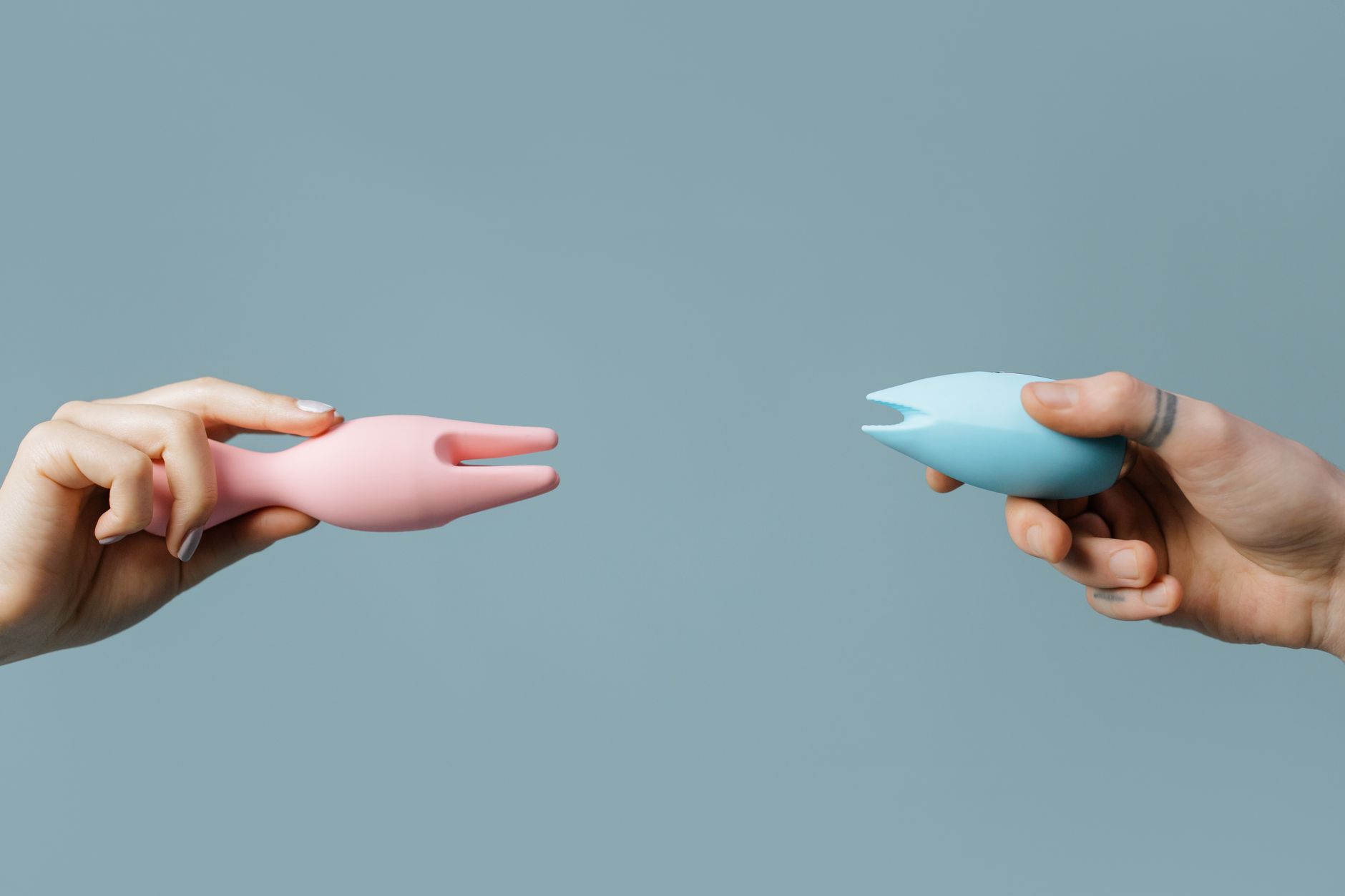
Photo by cottonbro studio on Pexels
Why lemon vibrators work better in this context
Most vibrators rely on high-frequency vibration to create intense sensation. Think of them like they're trying to shout. On hormonal birth control, the signal isn't getting through quite as clearly because the tissue is less engorged and the nervous system is responding more quietly. You can turn up the volume, but there's a ceiling. Past a certain point, more vibration just becomes noise.
Lemon clitoral vibrators work differently. The suction technology creates pressure-based stimulation rather than pure vibration. Instead of trying to overwhelm desensitized tissue with speed, suction draws the clitoris into a gentle vacuum, creating a fuller, more complete sensation. It's like the difference between tapping on glass and opening a door. The signal gets through because the mechanism is different.
For people on hormonal birth control specifically, that means you're not fighting your body's reduced responsiveness. You're meeting it where it actually is. Most people I've worked with say they feel sensation more clearly on a lemon vibrator when they're on hormonal contraception than they do on traditional vibrators, even at higher intensity settings.
The arousal timeline shifts too
This is the part that often surprises people: it's not just intensity that changes. It's time. Arousal on hormonal birth control often takes 15 to 25 minutes to really build, compared to maybe 5 to 10 minutes before you started the pill. That's not laziness. That's not waning desire. That's biology.
The vaginal pulse amplitude (how much the vagina dilates during arousal) is lower on hormonal contraception. The myotonia (muscle tension) builds more gradually. If you're used to fast-ramping pleasure, this can feel like your body isn't cooperating. But it is. It's just on a different schedule.
This is where a lot of people make a mistake. They assume the problem is the vibrator, so they switch to something more powerful. Instead, the fix is slowing down and using something that can meet you in a longer, steadier build rather than a quick spike. Lemon vibrators excel at that. The suction creates a kind of cumulative sensation that builds naturally over time rather than demanding an instant response from your body.
Lubrication isn't optional
Hormonal birth control often means less natural lubrication. That's not abnormal. It's not a sign anything is wrong. It's an expected physiological shift. And it matters, because reduced lubrication can make even gentle vibration feel uncomfortable or scratchy.
This is the one area where I see people get stuck. They think if they're using a toy, they shouldn't need lube. Wrong. Lube is not a backup plan or a sign something is broken. It's a basic tool that makes everything work better, especially when your body is producing less of its own.
Water-based lube is your friend here. Silicone can break down some materials, and honestly, water-based feels lighter and more comfortable when you're already experiencing changes to sensation. A good lube transforms the experience because now the lemon vibrator isn't working against friction. It's working with a smooth, consistent surface. The difference is dramatic.
Why you might feel differently about pleasure itself
Here's something less talked about: hormonal birth control doesn't just change your body. It can change your emotional relationship to pleasure. Some of this is physiological. Progestin can lower testosterone, which affects not just sensation but desire itself. Some of it is psychological. If you're experiencing reduced pleasure and you don't know why, it's easy to start avoiding the whole thing, which then feeds a cycle of lower motivation.
But here's what matters: understanding that this is a known, documented effect of hormonal contraception makes a huge difference. It means you're not broken. It means your partner isn't failing you. It means your body is doing exactly what the medication told it to do, and you can work with that instead of against it.
Many people find that reframing their approach to pleasure helps more than any specific tool. Instead of trying to recreate what pleasure felt like before, they focus on discovering what it actually feels like now. That might sound like small semantics, but it changes everything. You're not chasing something you lost. You're exploring something new.
Trying lemon vibrators when you're on hormonal birth control
If you want to experiment with how a lemon vibrator responds to your body on hormonal contraception, here's the practical approach.
Start with pattern 1 or 2 (the lower intensity settings) and spend a solid 15 to 20 minutes with it. Don't rush to high intensity. Let your body build up to arousal naturally. Use lube generously. You'll probably notice that even at lower settings, the sensation is quite clear because the suction mechanism is so direct.
Pay attention to timing. What used to feel like a 10-minute warm-up might now need 20 minutes, and that's completely fine. You're not doing it wrong. You're working with your body's actual response rather than against it.
If you're exploring pleasure solo, this is actually easier because you can take all the time you want. If you're with a partner, consider letting them know what you're noticing about your body so they understand it's not about them or about losing interest. Often, partners actually feel relieved to understand what's changed, because they can stop trying to recreate the old pattern and start building something new.
When to consider other options
If you've been on hormonal birth control for several months and pleasure still feels completely muted even with adjusted expectations and better tools, it's worth mentioning to your doctor. Sometimes a different formulation helps. Some people find that switching from the pill to a lower-dose patch or ring makes a difference. Others find that accepting the trade-off and prioritizing other aspects of their relationship is the right choice.
But before you make big changes, I'd recommend giving yourself time with lemon clitoral vibrators for people with reduced sensation and with a realistic timeline for arousal. You might be surprised at what opens up when you stop fighting the shift and start working with it.
Questions people actually ask
Does hormonal birth control permanently change pleasure?
No. The changes are real while you're on the medication, but they reverse once you stop. Some people notice pleasure returning within a few weeks of stopping. Others take a few months to feel back to baseline. The good news is it's not permanent damage. It's a temporary adaptation to the hormones you're introducing.
Can you take a break from birth control to reset sensation?
Technically, yes, but that's a question for your doctor in the context of your actual contraceptive needs. What I will say is that taking a break just for pleasure reasons often creates more problems than it solves (hello, unintended pregnancy). There are better solutions, like adjusting your approach and finding tools that work with your body's actual response.
Does every hormonal birth control method affect pleasure the same way?
Not exactly. Pills with higher progestin loads tend to have a bigger impact than lower-dose options. The patch and ring usually fall somewhere in the middle. The implant and the hormonal IUD vary. If pleasure changes are a dealbreaker for you and you're considering contraception, that's worth discussing with your provider upfront.
Will lemon vibrators help if pleasure has disappeared completely?
Lemon vibrators help when sensation is muted or delayed, which is the most common birth control related change. If pleasure has completely vanished, there might be something else going on, and I'd encourage you to talk to your doctor or a sex therapist to rule out other factors.
Is using a vibrator on hormonal birth control actually safe?
Absolutely. The contraception itself has nothing to do with the safety of using toys. If you're using a body-safe toy, practicing basic hygiene, and listening to your body, it's completely safe.
What if my partner notices the difference too?
That's actually really common and often a helpful conversation to have. Many partners notice that arousal takes longer or intensity feels different. Letting them know what's changed in your body means they can stop wondering if something is wrong with them or with the relationship. It's also an opportunity to explore pleasure in new ways together rather than trying to recreate what used to happen quickly.
The bottom line
Hormonal birth control changes pleasure. It doesn't end it. Understanding that distinction is everything because it means you're not solving a problem with your body or your relationship. You're adapting to a known physiological shift. Lemon vibrators are genuinely useful for that adaptation because they work through suction rather than pure vibration, which means they communicate clearly with tissue that's responding more quietly.
Your pleasure matters. Your body's actual response matters. And working with those rather than against them is how you find your way back to something that feels good, even if it looks different than it used to.
If you're stuck or confused about what's normal, reach out. That's what I'm here for.