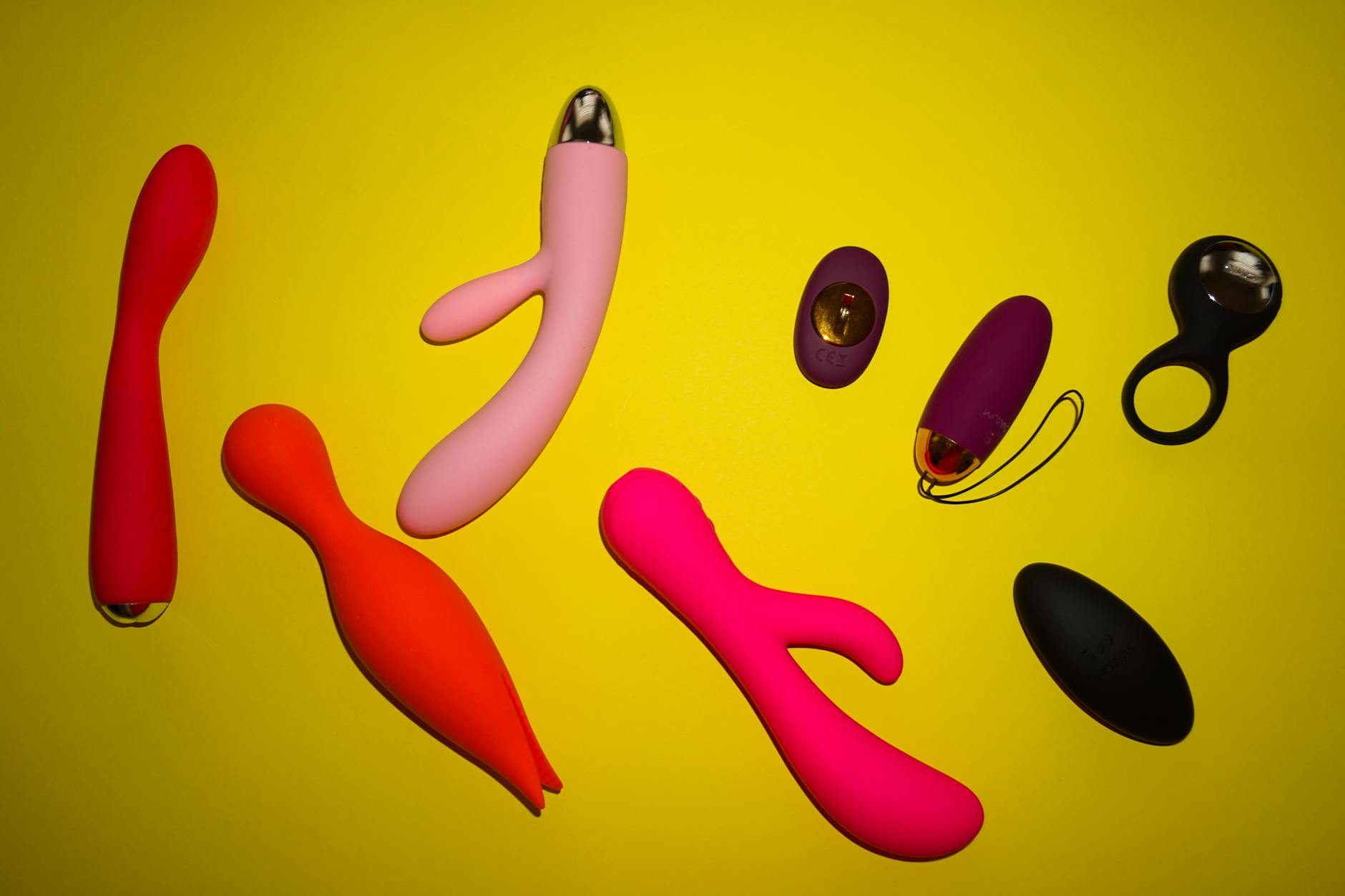
How to Use Lemon Vibrators With Partners Who Aren't Sure About Toys
Let's be honest. When one person in a relationship wants to bring a vibrator into the bedroom and the other feels skeptical, uncertain, or even threatened, it rarely goes smoothly if you just spring it on them mid-intimacy. That hesitation is real and worth taking seriously.
I work with couples all the time where this exact tension surfaces. One partner sees a lemon clitoral vibrator as a tool for shared pleasure. The other hears it as "I'm not enough," even when that's not what's being said at all. The gap between those two interpretations is where the conversation breaks down.
Here's the thing though: that gap is also where you have the most opportunity to deepen trust and understanding. Introducing a toy like the Lemon doesn't have to be awkward or fraught. It can actually become a moment of genuine intimacy.
The hesitation is never really about the toy
When a partner feels uncertain about vibrators, the surface objection ("I don't know," "It feels weird," "Do you need that?") is usually masking something deeper. Common ones I hear:
- Performance anxiety. He worries he can't make her come, so the vibrator feels like proof he's failing.
- Vulnerability. She's never explicitly asked for help with pleasure before, and naming it feels exposing.
- Cultural baggage. One or both partners grew up with messages that sex toys are shameful, solo, or cheating.
- Pacing mismatch. One person is ready for this conversation; the other feels ambushed.
None of those objections are solved by explaining how the Lemon works or showing a demo. They're solved by understanding what's actually being worried about and addressing that first.
Before you even mention a toy, get curious. "I've noticed you seem hesitant when toys come up. What's actually going on for you?" That question does more work than any sales pitch.
Reframe what a vibrator actually is
Most resistance evaporates once a partner understands that a vibrator isn't a replacement. It's a facilitator. It doesn't do anything you can't do. It just does it at a frequency and consistency your hand can't maintain for 20+ minutes.
The Lemon, specifically, uses suction stimulation. It's not traditional vibration. That distinction can actually help because it feels novel and different to both partners. It's not competing with anything you already do together. It's adding something neither of you has access to solo.
I often frame it like this with couples: "This is for us, not instead of us. It's another way to experience each other."
Start with conversation, not demonstration
Do not ambush anyone with a toy. Do not leave it on the nightstand as a surprise. Do not hand it over mid-foreplay and hope they get the message.
Instead, pick a time when you're both relaxed, clothed, and not in the bedroom. Maybe over coffee. Maybe while cooking. The lower the stakes feel, the more honest the conversation tends to be.
Start with your own desire, not their resistance. "I've been thinking about something, and I want to run it by you because your opinion matters." Tell them why you're interested. Is it about deepening sensation? Having more options? Exploring together? Be specific.
Then ask what they think. Listen without defending. If they say no, ask why. If they say maybe, ask what would make them feel more comfortable. If they say yes, great. But move slowly regardless.
Normalize the idea before you introduce the object
Once you've had the conversation and your partner hasn't shut it down completely, let the idea sit. Don't rush. Mention it casually in future intimate moments. "That thing we talked about... I still think it could be fun. What do you think?" Not every time. Just occasionally.
Watch how they respond over a few weeks. If they shift from defensive to curious, you're in a good place. If they stay closed off, that's information too. But most people soften once they realize it's not a threat to the relationship.
When they do seem curious, propose a practical scenario. "What if we just looked at it together? No pressure to use it. Just see what you think." Many partners' hesitation shrinks to nothing once they're holding the actual object. It's less intimidating than the fantasy version.
Let them lead the first use
This is crucial. If a partner has agreed to try a lemon vibrator but still feels uncertain, give them control. This means:
- They hold the toy, not you.
- They decide when and where it's used.
- They set the intensity (the Lemon has multiple patterns).
- You narrate what feels good, you don't direct.
Many partners' anxiety drops instantly when they realize they're not being "done to." They're choosing. That shift from passive to active changes everything. Suddenly it's not something happening to them. It's something they're doing, with your partnership.
Watch for the moment something shifts
There's usually a moment, 5-10 minutes in, where a hesitant partner's face or breathing changes. They feel how different the sensation is. Maybe they realize you're still engaged and present. Maybe they have an orgasm that surprised them in some way. Something clicks.
That's not the time to say "I told you so" or congratulate yourself. Just stay close. Ask how it felt. Let them sit with the experience. Many partners want to incorporate lemon clitoral vibrators into regular intimacy pretty quickly after that first time. Others need a few rounds to warm up. Both are completely normal.
Build it into your regular rhythm, not separate from it
If the first experience goes well, the next natural step is deciding how to actually use the Lemon together. Some couples use it as foreplay. Others use it as part of partnered sex. Some use it solo in front of their partner. There's no script.
What matters is that it feels integrated, not like a workaround. "Let's use the Lemon tonight" should feel as natural as "Want to try a different position?" The moment it stops being special or weird is the moment it becomes just another tool in your shared pleasure.
When your partner still says no
Sometimes, even after all of this, a partner simply isn't interested. That's okay. It doesn't mean the relationship is broken or that you can't have good sex together. It means you need to find other ways to deepen pleasure and connection.
But do check in about what "no" actually means. Is it a permanent no? A not-now-maybe-later no? A "no toys but yes to something else" no? Those are very different conversations. Pressing on any of them leads to resentment. Honoring them leads to trust.
Common questions partners actually ask
Q: Isn't using a vibrator like admitting I can't satisfy my partner?
No. Using a lemon vibrator is like saying "I want to experience pleasure with you in as many ways as possible." Orgasm is complex. Multiple factors affect it—stress, medication, cycle, emotional connection. A vibrator doesn't replace any of those. It just helps you work with them more effectively. Your partner wanting that is them wanting more of you, not less.
Q: Will my partner become dependent on it and not be able to orgasm without it?
Research suggests this is rare to nonexistent. Pleasure patterns don't really work that way. Your body stays capable of multiple pathways to sensation. Using a lemon clitoral vibrator alongside partnered touch actually tends to expand sensation, not narrow it. Plus, you don't have to use it every time.
Q: Should we use it when we're with other people or just alone?
That's entirely your call as a couple. Some pairs use the Lemon only solo or only together. Others use it in both contexts. There's no right answer. What matters is that you've agreed on it together and it feels comfortable.
**Q: What if one of us wants to use it and the other doesn't?
Then you have two separate experiences and one shared one. Your partner doesn't have to use a lemon vibrator for you to use one. Solo pleasure and partnered pleasure are different things. Both matter.
Q: Does mentioning we want to try this mean something's wrong between us?
Actually, it often means something's right. Couples who can have vulnerable conversations about pleasure tend to have stronger relationships overall. You're not broken if you want to explore. You're brave. And bringing a partner along in that exploration, even hesitantly, is how relationships actually deepen.
Q: How do I know if my partner will ever be interested?
You ask. You listen. You wait. You don't assume. Every relationship is different. Some partners warm up to the idea over years. Others never do. Your job is to figure out what you can both genuinely enjoy, not to convince someone that what you want is right. If this matters deeply to you and your partner is a solid no forever, that's real information you need to sit with.
The real win
The best outcome from introducing a lemon vibrator with a hesitant partner isn't necessarily that they fall in love with it. It's that you've had a hard conversation and come through it closer. You've learned something about each other. You've prioritized honesty over comfort. That's the foundation that actually matters.
When you eventually do explore together, it's built on that foundation. And that makes the physical experience richer, not just because of the vibrator, but because you got there intentionally, together.
If you're ready to have that conversation but not sure how to start, get in touch. That's what we're here for.