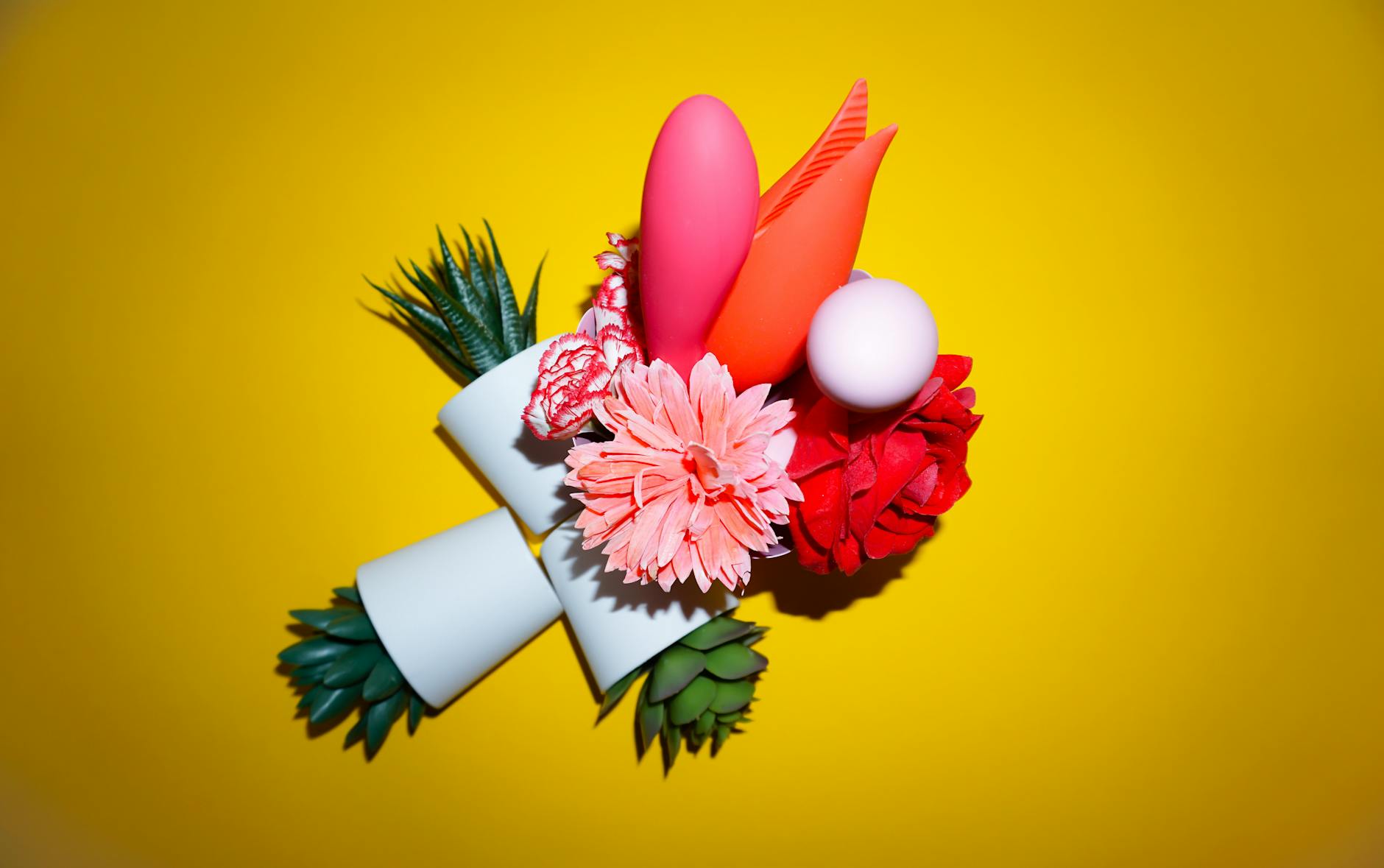
How to Use Lemon Vibrators With Irregular Cycles and Hormonal Fluctuations
Let's be real. Your body doesn't hit the same intensity every single week, and if you're buying a lemon vibrator expecting consistent results across your entire cycle, you're setting yourself up for frustration.
Hormones don't just affect your mood or when you get your period. They directly shape how sensitive your clitoris is, how quickly you get aroused, what intensity feels amazing versus what feels too much, and whether your brain is even interested in pleasure that day. Add irregular cycles into the mix, and you've got a moving target that standard sex toy advice completely ignores.
Here's what actually happens, and how to make your lemon clitoral vibrator work for you across all the phases, even when your cycle is unpredictable.
Why your cycle changes how pleasure works
Your clitoris has more nerve endings than anywhere else on your body, roughly 8,000. That's incredible for sensation. What's less talked about: hormones control how responsive those nerves are.
Estrogen peaks during ovulation. This boost makes the clitoris swell slightly, increases blood flow to the area, and heightens neural sensitivity. Translation: your lemon vibrator feels more powerful during this window, sometimes surprisingly so. Some people report that settings they normally enjoy feel too intense during peak estrogen.
Progesterone rises after ovulation. It's a dampening effect. Arousal takes longer to build, the clitoris is less engorged, and you might need to work harder to reach the same intensity you had just days before. Throw in an irregular cycle, and you can't predict when this shift happens.
Then there's everything else: cortisol from stress, thyroid fluctuations, medication timing, sleep debt, and yes, just plain randomness. Some cycles are 21 days. Some are 35. Some skip a month entirely. Your nervous system is tracking all of this, and your lemon vibrator's effectiveness shifts accordingly.
Reading your body week to week
Here's the move: stop trying to anticipate. Start paying attention to what's actually happening right now.
About 3-5 days before ovulation, notice if sensation feels heightened. Does your lemon sucker feel stronger than usual? Are lower settings doing what higher ones used to? That's your estrogen surge talking. It's not something to fix. It's information.
During your high-estrogen window (roughly 5 days around ovulation), consider dropping down one or two intensity levels on your lemon vibrator. You might not need the full strength you rely on other weeks. This actually makes a lot of sense from a pleasure perspective. Maximum sensitivity doesn't always mean maximum satisfaction. Often the opposite.
After ovulation, as progesterone climbs and estrogen dips, expect that you'll need more warm-up time. Spend 15-20 minutes on foreplay or lower-intensity patterns before ramping up your lemon vibrator. What feels too gentle mid-cycle won't feel too gentle now.
During menstruation itself, sensation is typically lower. Some people skip pleasure entirely during their period; others find it's a good time to experiment at higher intensities, knowing the clitoris is less reactive. Neither choice is right. Both are useful data about your body.
The irregular cycle wildcard
If your cycles are unpredictable, the game changes slightly. You can't say "Day 12 means I use Pattern 2." The timing is unreliable. Your window of high estrogen might last a few days or stretch longer. Ovulation might happen early or late or skip entirely some months.
What works: tracking when sensation actually shifts, not when you theoretically think it should. This sounds tedious, but most people notice the pattern after 2-3 cycles. Jot down a one-word note the night you use your lemon vibrator: "sharp," "muted," "normal," "intense." After a month, patterns emerge even if dates don't.
Irregular cycles are often tied to stress, sleep, nutrition, or hormonal conditions like PCOS. None of that goes away, but recognizing that your pleasure response is genuinely tied to these factors helps you stop blaming yourself when things feel different.
Adjusting your lemon vibrator settings in real time
The Lem vibrator comes with multiple intensity settings and patterns for exactly this reason. You don't need to swap devices. You need to trust the adjustment.
Start at Pattern 1 or 2 every time, regardless of where you normally start. If after 3-5 minutes it feels too soft, step up. If it feels right, stay. This ritual of checking in with your body each session, rather than automatically going to your "usual" setting, changes everything. It makes you responsive rather than robotic.
Water-based lubricant becomes even more important when you're working across cycle fluctuations. During high-estrogen phases, natural lubrication is usually adequate. During lower-estrogen phases, or during irregular hormone patterns, adding lube removes the friction that can feel uncomfortable. You're not broken if you need it; you're responsive to hormonal reality.
Some weeks your lemon clitoral vibrator will get you there in 8 minutes. Other weeks it takes 20. That's not failure. That's your body being honest about what it needs.
The mental piece nobody discusses
Between irregular cycles and hormonal fluctuation, your brain is getting conflicting signals about what your body needs. If you show up expecting the same experience every time and it's different, frustration builds fast. You start thinking "Something's wrong with me" instead of "My body's communicating something useful."
Invite a partner into this reality. If you're with someone, telling them "My cycle's irregular this month, so pleasure works differently right now, and I might need more time or different intensity" is miles better than silently adjusting settings and hoping they don't notice. Honestly about hormones isn't a mood killer. It's foreplay.
When you're solo, the permission is just for you. You don't need to perform consistency. You don't need to be efficient. You can spend 30 minutes with your lemon vibrator on Pattern 1 and feel no pressure to escalate. That's actually deeper pleasure, not less.
When to consider talking to someone
If your cycle is so irregular that you can't predict menstruation more than a few weeks out, or if pleasure response is genuinely unpredictable even when you account for hormonal shifts, a conversation with a gynecologist can help. Conditions like PCOS, thyroid dysfunction, or perimenopause all affect cycle regularity and pleasure responsiveness.
None of that disqualifies lemon vibrators from being useful. It just means you're working with more variables. And that's okay. Your clitoral vibrator can still deliver exactly what you need; you just need to meet it where you are each time.
Medication changes, too, can wildly affect pleasure. Antidepressants, birth control adjustments, and even changes in allergy medication shift how responsive your nervous system feels. If you start a new medication and notice your lemon sucker suddenly isn't working the way it used to, that's not the device. That's your body recalibrating. Give it 6-8 weeks before deciding anything's permanently different.
The rhythm of inconsistency
Here's what I tell couples navigating irregular cycles and hormonal fluctuation: consistency is not the goal. Attunement is.
Being attuned means you notice what's different. You adjust. You stay curious instead of frustrated. Your lemon vibrator isn't a button that produces the same outcome every time. It's a tool that gets more powerful when you understand the context it's working in.
Some weeks your body's a sprinter. Other weeks it's a long-distance runner. Some weeks it barely shows up. That's not a problem with the tool. That's your body being exactly as complicated and responsive as bodies are supposed to be. Your lemon clitoral vibrator just needs you to listen.
People also ask
Can I use my lemon vibrator during my period?
Absolutely. Some people find period pleasure is easier because they're less sensitive, so higher intensities feel more manageable. Others skip it because the sensation feels different or they're not in the mood. Both choices are completely valid. Menstrual blood is not a contraindication; your lemon sucker is waterproof and easy to clean. Use it if your body wants it.
Does PCOS affect how my lemon vibrator feels?
Yes. PCOS often creates irregular cycles and hormonal unpredictability. Your androgen and insulin levels fluctuate differently than standard cycles, which means clitoral sensitivity can shift in unexpected ways. Tracking your pleasure response becomes even more useful because you can't rely on cycle-based predictions. You're reading your body's signals directly.
What if my lemon clitoral vibrator feels too intense during ovulation?
That's your estrogen surge. Drop down one or two intensity levels. Counterintuitively, less intensity often leads to more satisfaction during your high-sensitivity window because you're not fighting overwhelming sensation. You're working with heightened nerve response, not against it.
How do I know if medication is affecting my pleasure response?
Timeline matters. If you started a new medication in the last 6-8 weeks and noticed your lemon vibrator isn't working the way it used to, give it more time. Antidepressants especially can take 8-12 weeks to stabilize pleasure function. If nothing's changed after 12 weeks, or if pleasure disappeared completely, that's worth discussing with your prescriber. Other options exist.
Should I track my cycle to use my lemon vibrator better?
Not unless you want to. Some people love the data. Others find it stressful. The real tool is noticing, in the moment, what your body's responding to. If that happens to coincide with cycle phases, great. If your cycles are so irregular that tracking feels pointless, skip it and just check in with your body each time you use your lemon sucker.
Can irregular cycles mean something serious?
Sometimes. Wildly irregular cycles can signal PCOS, thyroid issues, hormonal imbalance, or other conditions worth checking out with a doctor. But irregular cycles are also completely normal for some people. The point: if it's new or changing, get it checked. If it's your baseline, it's just your baseline. Either way, your lemon vibrator works exactly the same.
References and further reading
For deeper information on hormonal cycles and clitoral sensitivity, consult resources from the American College of Obstetricians and Gynecologists (ACOG) on menstrual cycle variations and reproductive health. Research on cycle syncing and pleasure response has been explored in sexological literature, though much remains understudied. If you're experiencing significant irregularity, speaking with a gynecologist trained in reproductive endocrinology can help rule out underlying conditions and guide personalized strategies for working with your body's rhythms.