
Let's start with the honest part
The earliest weeks of a relationship are when many people decide whether pleasure matters. You're still learning each other's bodies, rhythms, and what feels good. Introducing a lemon vibrator now isn't weird or "too fast." It's actually the clearest signal you can give: I care about your orgasm. Not someday. Now.
Here's the thing that no one tells you: couples who talk about toys early tend to have better communication about pleasure for years afterward. It breaks down the shame around wanting more, wanting differently, or wanting to experiment. And honestly, that foundation matters more than any individual orgasm.
Why new relationships are actually the right time
There's a paradox about introducing sex toys with a new partner. You might think it's easier after years together because you're already comfortable. Actually, the opposite is often true.
In new relationships, there's less baggage. Neither of you has years of "this is how we do things" baked in. You're both still discovering what you like. You haven't yet developed the patterns that can make later conversations feel like criticism. This is the moment when bringing in a lemon clitoral vibrator reads as collaborative and exploratory, not "something's missing."
Studies on couples and sex toys show that people who introduce toys early report higher sexual satisfaction overall. Why? Because they normalized the conversation. Pleasure became collaborative from the start.
The timing conversation: when to actually bring it up
There's a spectrum here, and where you land depends on how you two operate.
The fast track: After 4-6 weeks of regular sex, when you're both comfortable being naked together and the initial nervousness has lifted. This is the sweet spot for most people. Early enough that it doesn't feel like a reaction to "we need to fix something," but late enough that you've had honest sex conversations already.
The medium track: After you've talked about fantasies, boundaries, or what you each like during sex. This creates natural scaffolding. If you're already discussing pleasure, introducing a tool feels like the next step, not a surprise.
The slow burn: Bring it up outside the bedroom first. A text, a casual conversation over coffee, even mentioning an article you read. Let it sit for a day or two. This removes the pressure-cooker energy of "let's try this right now."
What you're avoiding is springing it during sex or after a disappointing experience. Both send the wrong signal. During sex means you didn't trust your partner with the conversation beforehand. After bad sex means "I need this to fix what just happened," which nobody wants to hear.
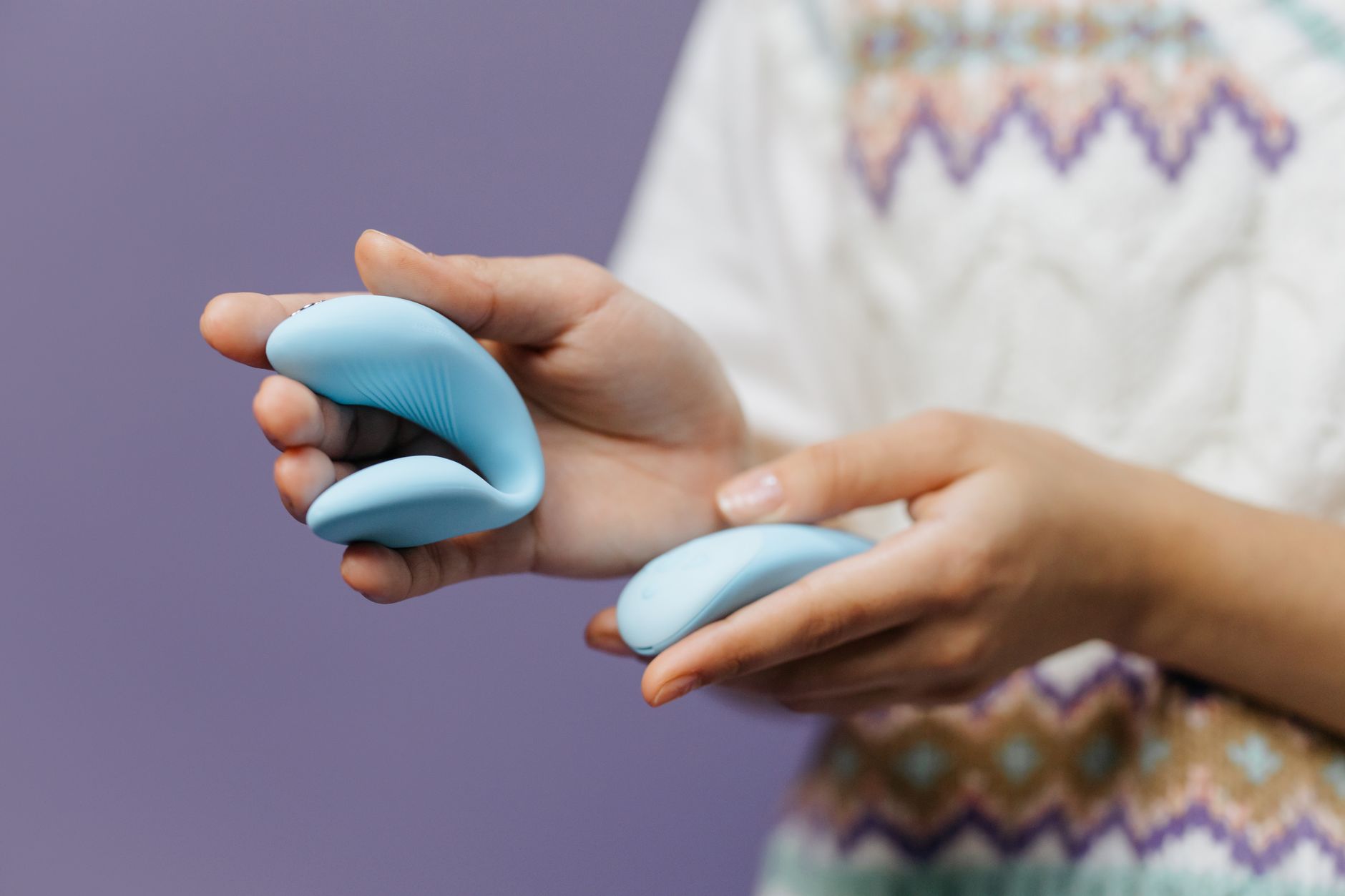
Photo by cottonbro studio on Pexels
How to actually say it
Forget flowery language. Directness is sexier than you think.
Start with curiosity, not demand. "Have you ever used toys before?" or "I've been curious about trying something together. Would you be into that?" You're inviting conversation, not announcing a plan.
If they seem hesitant, ask why. The answer matters. Are they nervous about performance? Unsure how a toy fits into partnered sex? Worried it means you're not satisfied? Each answer gets a different response. Performance anxiety needs reassurance that toys enhance what you already have. Confusion needs practical info about how it actually works. Insecurity needs honesty: "I want more for us together, not away from you."
If they're enthusiastic, great. Move to the practical part. If they're on the fence, don't push. Suggest they think about it, and circle back in a few days. Pressure kills arousal and kills trust.
Here's what helps: mention that you've seen the lemon clitoral vibrator recommended specifically for couples because it's intuitive and the suction pattern doesn't feel overwhelming when someone's exploring for the first time. Being specific makes it real, not theoretical.
Why the Lem specifically works for new couples
There are a lot of vibrators out there. The reason lemon adult toys like the Lem feel right for couples just starting out is mechanical and psychological.
Mechanically, suction-based stimulation feels different from traditional vibration. It's gentler on first contact, which matters when your partner doesn't know what to expect. You can start at low intensity and build, which reduces the "oh my god that's intense" moment that sometimes makes people anxious. The Lem also works well for people with different sensitivity levels because you've got control.
Psychologically, lemon vibrators feel less intimidating. They don't look like a replacement for a partner. The suction pattern actually mimics manual stimulation, which makes it feel collaborative instead of like something's replacing you.
When you're using it together for the first time, you can hold it, experiment with angles, take breaks. It's a shared conversation, not a performance tool.
The first time: what actually happens
Set expectations low. The first time using a lemon clitoral vibrator together is rarely explosive. It's usually exploratory.
Start with clothes on or partially on. This removes the vulnerability of being fully naked while trying something new. You can use it over underwear, through fabric, however feels right. This also takes the pressure off immediate pleasure. You're learning sensation, not chasing an orgasm.
Let your partner hold it first if they want to. Or you hold it. Either way, communicate constantly. "Does that feel good?" "Want me to move it?" "Should we go slower?" This isn't you failing at solo pleasure. This is you both learning what this tool does for your body. There's no "right" way to do this.
If it doesn't feel amazing the first time, that's fine. Toys are tools, not magic. It might take a few tries to find the right pressure, angle, or rhythm. That's normal and actually useful information.
Building it into your pleasure together
Once you've tried it once, the second and third times are where it gets interesting.
You might use the Lem while your partner's inside you. You might use it while they use their hands or mouth elsewhere. You might take turns with it. There's no script. The point is you're both invested in the experience.
For partners who struggle with lasting long enough, a lemon clitoral vibrator can take pressure off. Instead of focusing on speed or duration, they can focus on the pleasure happening. That shift alone often improves everything else.
For partners where there's a mismatch in how they orgasm (one person faster, one slower), toys level the playing field. You can both reach climax at roughly the same time, which changes the feeling of sex from "waiting" to "together."
The communication you started with "should we try this?" continues here. "I loved this part" or "next time, could we try it differently?" These conversations are the real point. The toy is just the catalyst.
What to avoid early on
Don't use it as a workaround for bad communication. If your partner can't tell you what feels good, a toy won't magically fix that.
Don't introduce it during a moment of frustration. "You never make me come, so I'm using this" is a bomb. "I want to explore this together because I love you" is an invitation.
Don't assume your partner knows how to use it. Show them, guide their hand, let them guide yours. Lemon sexual toys aren't complicated, but the first time is about learning, not performing.
Don't keep it hidden after. If you're both open about using it, leave it out. Make it normal. That normalization is part of building a relationship where pleasure is collaborative.
FAQ: What couples really want to know
What if my partner says no? Does that mean they don't want me?
Not necessarily. They might feel insecure, or toys might not align with their preferences, or they might need more time. Ask without judgment. "I'm curious what makes you hesitant." Listen to the actual answer, not the one you're afraid of. Sometimes people surprise you once they understand it's not about dissatisfaction.
Should I buy it without asking first?
I'd suggest asking first. Buying toys together can be part of the bonding. You get to talk about it in a low-pressure setting, pick something you both feel good about, and unbox it together. That shared moment matters.
What if they want to use it but I'm nervous about performance?
Here's the reframe: a toy isn't a judgment on you. It's an expansion of what you can do together. You're not being replaced. You're being enhanced. If you're still nervous, talk about it. Most people feel the same way at first.
Is it too soon to introduce toys if we're only a few months in?
If you're both comfortable having honest conversations about sex, no. If sex still feels a bit awkward or unspoken, maybe wait another few weeks. The relationship needs just enough foundation that introducing a toy feels like "let's explore" not "we have a problem."
What if we try it and it doesn't work or feel good?
Then you've learned something. Not every person loves every toy. Maybe the Lem works better for solo play and you explore other options together. Or maybe you're both just not toy people. Either way, you've kept the conversation open. That's the win.
How do I know if my partner is only into it because they think I want it?
Ask directly. "Are you genuinely into this, or are you doing it for me?" Most people tell you the truth if you create space for it. And if they are doing it for you, that's actually okay sometimes. Generosity in pleasure matters. But keep checking in. Enthusiasm should feel mutual over time.
The real point
Introducing a lemon clitoral vibrator with a new partner isn't about the toy. It's about choosing pleasure together from the beginning. It's about saying "I want your orgasm" and "I want to explore this with you" and building that into the foundation of what you have.
The couples who do this early report higher trust, better communication, and less shame around wanting more from sex. That matters more than any single experience.
If you're thinking about this with your partner, trust that impulse. You're building something good.