Here's what nobody tells you about desire
You probably learned that desire works like this: you see someone attractive, a spark ignites, things escalate from there. Spontaneous desire. The model. The one that sells movies and romance novels.
Except that's not how most people's bodies actually work. Especially not over time. For roughly 70% of people with vulvas, and a significant portion of men, arousal doesn't just happen. It builds. It needs something. A touch, a conversation, the right moment, sometimes just permission to want it.
That's responsive desire. And it's not a malfunction.
What responsive desire actually means
Responsive desire means your body doesn't kick into arousal first. Instead, something external triggers it. Physical touch. Mental connection. A specific environment or ritual. You don't think "I want sex" and then feel it. You feel stimulation, and then you want sex.
For decades, therapists called this a problem. Low libido. Desire disorder. Pills were suggested. Couples fought about it. But here's what we know now: responsive desire is a normal variation in how humans are wired. It's not broken. It's just different from spontaneous.
The friction happens when one partner has spontaneous desire and the other has responsive. Spontaneous person initiates. Responsive person hasn't had time to warm up. No one feels good. Everyone assumes something is wrong.
Nothing is wrong. You're just using the wrong strategy.
Why lemon vibrators change the game for responsive desire
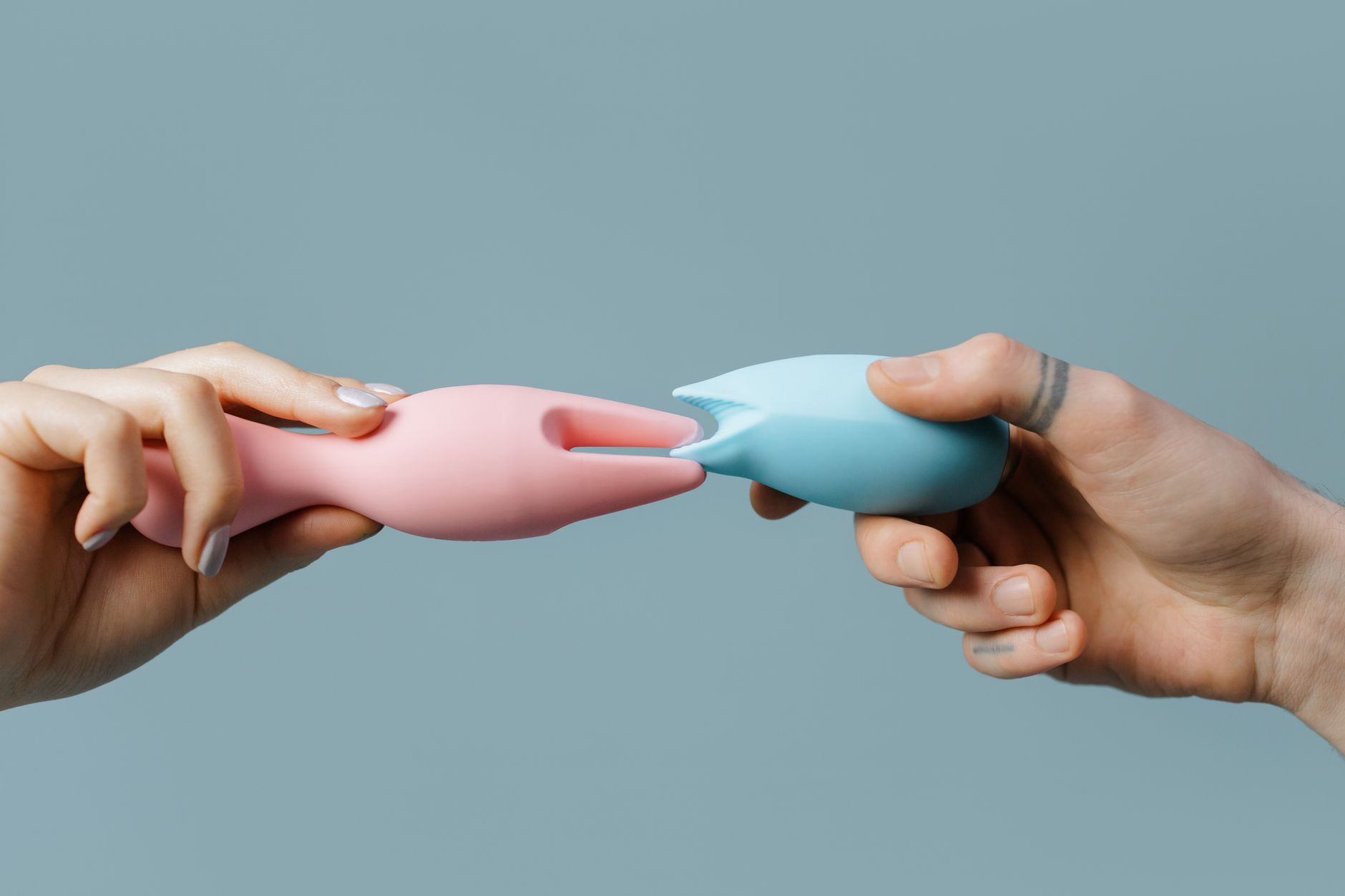
Lemon clitoral vibrators, especially suction-based designs, are engineered for exactly this dynamic. Here's why they work so well.
They lower the activation energy. With spontaneous desire, you might pleasure yourself or be touched and feel immediate interest. With responsive desire, you need something to get the chain reaction started. A lemon vibrator does that job brilliantly. The suction stimulates nerves in a way that's different from typical vibration, and many people find they reach arousal faster and more consistently with that sensation.
They work at any intensity level. When you're warming up from neutral, you don't want full intensity immediately. The Lem vibrator comes with multiple patterns and settings. You can start at level one, where the stimulation is gentle and exploratory, and build from there. Your body decides the pace. That's impossible with a partner trying to "get you in the mood." A vibrator lets responsive desire move at its own speed.
They separate pleasure from pressure. When a partner is waiting for you to get aroused, there's often an invisible clock running. Are you taking too long? Will they get frustrated? This pressure actually slows down responsive desire because your nervous system stays alert to the relational dynamic instead of dropping into pleasure. Using a lemon vibrator solo removes that entirely. You're not performing. You're not being watched. You're just exploring what feels good right now.
How to integrate lemon vibrators into responsive desire
Three concrete strategies that work:
Strategy one: make it part of your wind-down ritual. If responsive desire means you need a trigger, make the trigger predictable and pleasant. Some people find that 10-15 minutes with a lemon vibrator right before bed, or after work, or at a specific time, becomes the thing that shifts their nervous system. It's not about reaching orgasm necessarily. It's about giving your body permission and space to warm up. This primes everything that comes next. If you have a partner, this solo practice often leads to more connected sex because you've given your responsive system a chance to do its job.
Strategy two: use it as foreplay, not main event. Responsive desire often needs a build. Many people find that starting solo play with a lemon clitoral vibrator for 5-10 minutes, then transitioning to a partner, is the sweet spot. You're already aroused. Your body knows what it likes. The pressure is off. Then partnered sex becomes genuine continuation rather than starting from zero.
Strategy three: communicate what responsive desire actually looks like. If you have a partner, name it. "I have responsive desire, which means I don't get turned on first. I get turned on through touch and attention. Here's what I actually need." Sometimes that's using a lemon vibrator together. Sometimes it's them helping you explore it. Sometimes it's just them understanding why quickie initiations don't work. Naming the dynamic often resolves half the tension around it.
The lemon vibrator advantage for responsive arousal
Why not just use fingers or a vibrating toy you already own? A few reasons lemon vibrators, especially suction-based designs like the Lem, tend to work better.
Suction stimulates a different set of nerve endings than traditional vibration. For many people with responsive desire, that different sensation is exactly what breaks through the initial neutral state and tips into arousal. It's like the difference between a gentle tap and a gentle press. Both can build pleasure, but one might wake your body up faster than the other.
The sensation is also more directional and controlled. You're not just vibrating. You're drawing in. For some people, that feeling of suction around the clitoris activates arousal more reliably than other types of stimulation. It's worth experimenting.
And mechanically, suction-based vibrators tend to be quieter, easier to control for pacing, and less likely to numb sensation over time. For responsive desire, where you're building gradually, you want sensation that stays responsive the whole time. Numbness defeats the purpose.
What responsive desire is NOT
A few things I want to clarify, because these get confused a lot.
Responsive desire is not "low libido." Low libido is when desire is absent even with consistent positive stimulation. Responsive desire is when desire appears with the right conditions. There's a real difference.
Responsive desire is not a relationship problem. It becomes one only when both partners think it should work differently. A partner with spontaneous desire doesn't need to change. But they do need to stop interpreting responsive desire as rejection. It's not. It's just how that person's arousal system works.
Responsive desire is not something to "fix." If you're coming from a place of "something is wrong with me," that mindset will make everything harder. Responsive desire is just a different type of desire. It has different triggers and different timing. That's it.
When to explore this with a partner
If you're in a relationship and you have responsive desire, there's often a conversation missing. Partners assume desire should just happen automatically. When it doesn't, they think it means the attraction is fading, the relationship is stalling, or something is wrong physically.
The truth is usually simpler: your body just warms up differently. And once your partner understands that, the solution often feels obvious. Set aside time for pleasure. Let your responsive system do its thing. Use tools like lemon vibrators to make the process easier and more reliable.
Some couples find that solo practice with a lemon clitoral vibrator actually improves their partnered sex life, because one partner is no longer operating from a place of guilt or pressure. You're arriving at sex already somewhat aroused, having taken responsibility for your own pleasure.
FAQ: Responsive desire and lemon vibrators
Can responsive desire change over time?
Yes, absolutely. Stress, relationship changes, health shifts, and even how much you're sleeping can shift where you fall on the spontaneous-responsive spectrum. You might be responsive for years, then shift more toward spontaneous during a period of low stress. Or the opposite. It's not fixed. Which means tools like lemon vibrators that work for responsive desire today might feel different next year, and that's fine. Pleasure is always moving.
Will using a lemon vibrator train my body to depend on it?
No. This is a common worry, but it's not how arousal works. Your body will become familiar with a sensation that works well, which means it might be easier to access pleasure with it. That's good. It doesn't mean you can't access pleasure without it. Think of it like knowing your favorite coffee order. Knowing what you like doesn't mean you can't drink tea.
Is responsive desire more common in women or people with vulvas?
Responsive desire shows up across all bodies and genders, but yes, it's more common in people with vulvas and more commonly discussed in that context. Some research suggests it's more prevalent in cisgender women, but that could also reflect what gets studied and how. The key point is that responsive desire is normal for whoever experiences it.
Should I use a lemon vibrator every time I have sex?
Not necessarily. Many people with responsive desire use one to warm up solo, then transition to partnered sex without it. Others use it sometimes. Some people find they need it more during high-stress periods and less when life is calm. It's a tool that works when it works. You don't need a rigid rule.
Can a partner help trigger responsive desire without a vibrator?
Absolutely. Manual stimulation, kissing, specific types of touch, conversation, even just time and attention can trigger responsive desire. A lemon vibrator is one option that works particularly well for many people, but it's not the only option. The point is understanding what your personal trigger is.
What if my responsive desire is tied to emotional intimacy, not just physical touch?
Then prioritize that. Some people's responsive desire is triggered by physical sensation. Others need emotional connection first. Many need both. If you need emotional intimacy to warm up, that's a different problem than a tool can solve alone. But using a lemon vibrator during a moment of emotional connection, once you're already warmed up, can deepen the whole experience.
The real thing about responsive desire
I work with couples constantly where one partner has spontaneous desire and the other has responsive. The couples who do best are the ones who stop treating responsive desire as a flaw and start treating it as information.
Information about how that person's arousal system works. What helps it. What hinders it. Whether they need space, touch, conversation, time, a specific environment, or a combination of those things.
Lemon vibrators are one tool that happens to work really well for responsive desire because of how they stimulate the clitoris and the flexibility they offer for pacing and intensity. But the deeper thing is this: responsive desire is not an obstacle to overcome. It's just your body's particular way of waking up to pleasure.
Once you stop fighting that and start working with it, everything changes. Your pleasure increases. Your confidence increases. If you have a partner, the tension often dissolves because you're both finally on the same page about how your arousal actually works.
That's when sex gets good. Not when it matches some external standard, but when it matches how your actual body works.
If you want to explore what works for your specific responsive desire pattern, reach out. That's exactly what we talk about at Get Lemon Adult Toys. Every body is different, and responsive desire is just one of a hundred variations that are all completely normal.