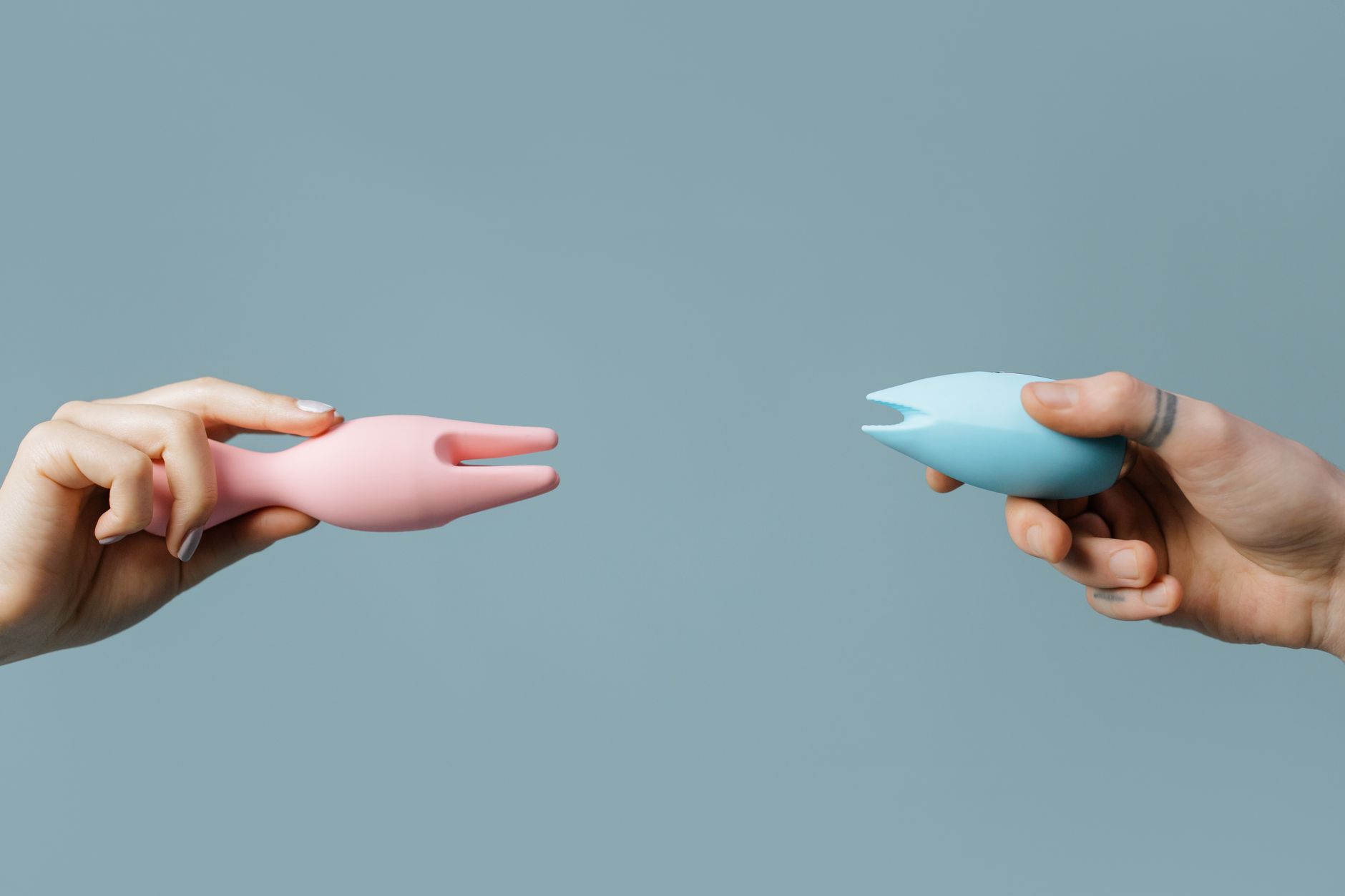
How to Use Lemon Vibrators When You Have Multiple Partners or Fluid Dynamics
The practical guide to integrating clitoral vibrators into non-monogamous or non-traditional arrangements: hygiene, boundaries, and why the Lem works across different relationship structures.
Multiple partners doesn't mean multiple conversations about toys need to happen. It means one really careful conversation—actually, probably three—with clear agreements about what gets shared, what stays solo, and how you handle the practical stuff nobody wants to talk about but absolutely should.
I work with a lot of people navigating non-monogamous or non-traditional arrangements, and the toys conversation tends to get dodged. Partners talk about testing, about barriers, about who sleeps where. But a lemon vibrator or clitoral suction toy? That rarely comes up until someone's already uncomfortable. Let's fix that.
When you're navigating pleasure across different partners or dynamics, toys become part of the sexual health conversation in a way they aren't in traditional monogamy. A toy can be a barrier (literally). It can be a source of comfort for one partner and anxiety for another. It can represent different things to different people you're intimate with.
And honestly, the logistics matter. If you're traveling between partners, keeping a toy clean and private becomes a real practical consideration. If you share a toy, the hygiene protocols matter more. If some partners use toys with you and some don't, managing that without anyone feeling excluded requires intention.
Lemon clitoral vibrators—especially air-suction designs like the Lem—actually simplify some of this because they're less about replacing anyone and more about creating a specific kind of stimulation that either partner can contribute to or watch or step back from without it feeling like rejection.
Start with desire, not logistics. "I'm thinking about getting a lemon vibrator. Here's what it does, here's why I want it, here's how I imagine using it."
Then move to the practical questions:
With a primary or long-term partner: Are they using it too? Do they want to? Is this something we do together, or something solo that they're supportive of? Some partners love being present. Some want no part of it. Both are fine. What matters is knowing.
With secondary partners or casual connections: When does the toy come out, if at all? Do they know about it ahead of time? Is it okay for you to use it with them, or do they have a preference to be the only source of stimulation? Again, nobody's wrong. Just clear.
Across multiple partners: If Partner A and you share a toy and Partner B and you don't, everyone needs to know the arrangement. Discovering mid-experience that a toy's been shared (or hasn't) is never fun. Talking about it beforehand is embarrassing for thirty seconds and prevents actual damage.
Let's be direct: shared toys carry risk. Not because toys are inherently unsafe, but because fluid exchange is fluid exchange, whether it's penis-to-toy-to-vulva or toy-to-person-to-toy.
For people navigating multiple partners, here's what actually matters:
Non-shared toys first. The easiest solution is everyone has their own. A lemon vibrator isn't expensive—you can own one. If cost is the barrier, that's worth solving rather than compromising on boundaries.
If sharing happens: between the same two people consistently, barriers matter the same way they do for other sex acts. Condoms over toys work. Toy covers work. Washing with soap and warm water works. What doesn't work is assuming silicone is self-cleaning. It isn't.
Different partners, different toys. If Partner A uses Toy X and Partner B uses Toy Y, that's infinitely simpler than rotation schedules.
Backup plan: I recommend having a toy that's "solo-only" and a toy that's "partner-accessible." This removes the decision-making in the moment. You already know which one goes where.
Here's where it gets real: toys can trigger insecurity even in secure people. "If she needs a vibrator with me, does that mean I'm not enough?" Even when intellectually you know that's not true.
Multiple partners can amplify this. You might feel completely fine using a toy with Partner A, confident and integrated. But with Partner B, suddenly you're self-conscious. That's worth naming.
One thing that helps: understanding what the toy is actually doing. A lemon clitoral vibrator like the Lem uses air-suction stimulation. It's not replacing anyone. It's creating a specific sensation that a person can't create alone. Neither you nor your partners can create suction. You literally can't. So it's not "you're not enough." It's "here's a thing bodies can't do, and it feels good."
If that framing doesn't land for someone, you might have a different conversation that's not actually about the toy. It might be about fears about connection, about desirability, about how they fit into your life. A toy is rarely actually the issue.
Say you're seeing Partner A and Partner B, and you want to use lemon vibrators with both. Here's a realistic setup:
Your own toy. You keep one Lem or clitoral vibrator that lives with you, that you use solo. It's yours. It stays charged, it stays clean, and nobody's negotiating about it.
Partner-specific approach. With Partner A, you've talked through that you'd like to integrate the toy sometimes, and they're excited. Great. With Partner B, you haven't brought it up because the dynamic is different or the timing isn't there yet. That's fine.
Communication rhythm. You're not having one conversation and then pretending it didn't happen. "Hey, I'm going to grab my vibrator" becomes normal language. Nobody's sheepish about it. It's just part of how you have sex.
Hygiene between partners. You're not using your toy with Partner A and then immediately with Partner B. You're either cleaning it properly (which takes a minute) or you're giving yourself time between encounters. If you're in a situation where you're cycling through partners in a single night, you need a dedicated strategy. Some people have separate toys. Some people just clean in between. Whatever reduces risk and feels manageable to you.
When I recommend the Lem specifically for people with multiple partners or fluid dynamics, it's for a few reasons:
It's small. It's discreet. It doesn't take up emotional real estate the way a larger wand might. It's not a "big thing you introduced into the relationship." It's a tool.
It's not penetrative. That matters for people managing multiple partners because it sidesteps one whole layer of potential weirdness. You're not using it the way you use other parts of your body. You're using it for stimulation your hands can't provide.
It's genuinely good. If you're introducing a toy into multiple dynamics, you want it to actually feel amazing. A mediocre vibrator becomes resentment. The Lem doesn't have that problem. People feel the difference immediately.
And it's genuinely private. You can have one. Your partners don't need to touch it or see it unless you want them to. That clarity is everything when you're juggling different relationships.
Sometimes the toy conversation is actually a different conversation.
If Partner A is enthusiastic about toys and Partner B bristles, the toy isn't the real issue. It might be about how you navigate pleasure differently with each person. It might be about assumptions they have about what toys mean. It might be about feeling competitive or less-than.
If you're using a toy solo and your partner feels excluded, that's a conversation about how they fit into your pleasure, not about whether toys are okay.
If you're ashamed of wanting a toy with one partner but not another, that's worth examining. Are you adjusting your needs to match what you think someone wants? That's not sustainable.
The toy is often just where the real conversation needs to happen. Use it as a prompt. "I want to talk about pleasure, and I think this toy is part of that for me."
Technically yes, with proper cleaning and clear agreements. Practically, I recommend each person has their own if they're going to share toys. A lemon clitoral vibrator is affordable enough that separate toys eliminate a whole category of risk and awkwardness. If sharing does happen, wash with soap and warm water between partners, and make sure everyone knows the toy is shared. No surprises.
You don't have to match your pleasure style across partners. If Partner A loves exploring with toys and Partner B prefers not to, you can use toys with Partner A and not with Partner B. That's not betrayal. That's matching the dynamic to what everyone actually wants. The only mistake is pretending a partner is fine with something they're not.
Separate the toy from their adequacy. "I want to explore a specific kind of stimulation that feels good to my body" is different from "I need this because you're not enough." The first is true. The second isn't. If a partner can't hear the difference, that's a communication issue that predates the toy. Worth addressing directly.
Not weird. But you do need to ask first. "I like using a vibrator during sex—are you cool with that?" Same way you'd ask about condoms or anything else. Some people are thrilled. Some people have a preference. You need to know.
That's worth examining. Are you hiding it because they'd be genuinely upset and you're avoiding conflict? Or are you hiding it because you're uncomfortable with your own pleasure? Those are different problems. The first is a relationship issue. The second is a you issue. Both are worth addressing, but they need different solutions.
Every time it's used with a partner, wash with soap and warm water. That's it. You don't need special cleaner. You don't need to sterilize it. Basic hygiene is sufficient. Dry it after and store it somewhere clean. A lemon clitoral vibrator with proper care lasts years.
Multiple partners means multiple conversations. That's not a flaw in the system. That's the point. When you're honest about desire and logistics, toys stop being weird and start being useful.
Your pleasure matters regardless of who you're intimate with. The people you're intimate with deserve to know what you want. And a vibrator—especially one designed as thoughtfully as a lemon clitoral vibrator—becomes just another part of how you show up honestly in your relationships.
Start with conversation. The toy comes after you've already decided together that it's welcome. Everything else flows from there.