The thing nobody tells you about shame and arousal
Your brain can't do both at once. You can't feel deep pleasure while simultaneously narrating a voice in your head that says you shouldn't be doing this. That's not a moral failing. That's neurology.
Self-consciousness about pleasure is one of the most common blocks I see in my practice, and it almost never shows up as "I don't want sex." It shows up as arousal that stalls halfway, numbness during stimulation, or the ability to get there alone but nowhere with a partner. You're not broken. Your nervous system is just protecting you from something it learned to fear.
The good news. Lemon vibrators sidestep this whole dynamic because they work so efficiently that your brain doesn't have time to run the shame script. That matters more than you'd think.
Where self-consciousness actually comes from
It's almost never about the act itself. Here's what I hear most often.
Your body was taught that pleasure is unsafe. Maybe a parent walked in. Maybe you heard someone called a slut. Maybe religion said your desires were sinful. Maybe you grew up in an environment where women's pleasure was never discussed, which created a vacuum that shame rushed in to fill. Your nervous system didn't invent this belief. It absorbed it.
You were taught that wanting things makes you needy. This one shows up constantly in people who were parentified as kids, who learned early that their needs were an inconvenience. Pleasure is a need. So somewhere along the way, wanting pleasure became proof that you're too much.
You're carrying someone else's discomfort. Partners who avoid sex. Parents who flinched. Culture that frames women's desire as either pathetic or predatory. You internalized it as your problem to manage, not theirs to sit with.
You've had bad experiences. Pressure, coercion, pain, violation. Your body is literally protecting itself.
None of this makes you prudish. It makes you a person living in a body that learned to associate pleasure with risk.
Why lemon vibrators specifically work through shame
Here's the neuroscience part made simple. Shame requires cognitive space. You need mental resources to keep running the shame narrative. Lemon vibrators create so much focused physical sensation that your prefrontal cortex, which is doing all the self-judgment, gets temporarily offline. You shift from thinking to feeling.
That's not dissociation. That's the opposite. It's reclaiming sensation.
Lemon vibrators also work because they're efficient. The suction technology means you don't have to do anything. You're not performing pleasure. You're not trying to convince yourself you deserve it. You're receiving it. That subtle difference rewires something important.
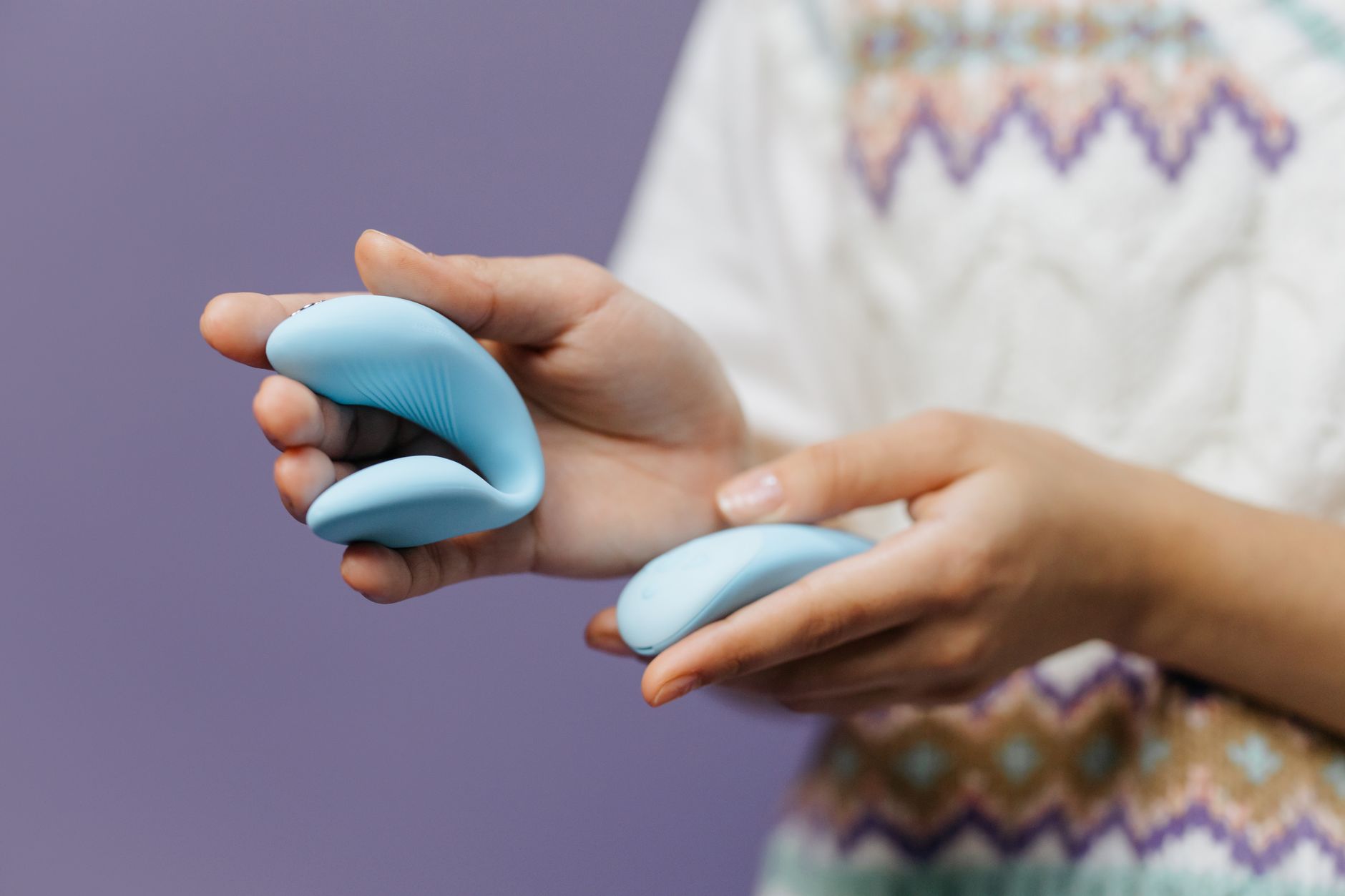
Photo by cottonbro studio on Pexels
The four things that actually help
One. Start with solo time, not partner time. You can't learn to trust pleasure while someone is waiting for you to finish, or watching, or needing something from the experience. Solo practice is where you retrain your nervous system. It's not selfish. It's foundational.
Two. Create a space you actively chose. Not a stolen 90 seconds when everyone's asleep. A real moment where you decided, out loud or to yourself, that you're worth 15 minutes. That decision is part of the rewiring. Your body needs to know you chose this, not that it happened by accident.
Three. Use lube, even if you think you don't need it. This is about permission, not mechanics. Water-based lube signals to your nervous system that you're taking this seriously. You're preparing. You're not rushed. You deserve the whole experience, not just the finish line.
Four. Stay with sensation, not orgasm. Here's where most people get stuck. We're taught that orgasm is the goal, so we're constantly checking in on whether it's happening. Instead, notice texture. Notice rhythm changes. Notice what makes you inhale or shift your position. Orgasm follows attention. It doesn't lead it.
What happens when you use lemon vibrators consistently
Three things I've watched happen repeatedly.
First, your window of arousal expands. That voice that says "you don't deserve this" gets quieter because you have contrary evidence now. You've felt pleasure deliberately and nothing bad happened. Your nervous system starts to update its risk assessment.
Second, sensation comes back online. Numbness usually isn't about the physical. It's about the mental bandwidth you're using to fight yourself. Remove the fight, and the feeling returns. Sometimes it takes weeks. Sometimes it takes months. But people consistently report that they feel their bodies again.
Third, if you have a partner, things usually shift too. Not because you're "fixed" now, but because you're no longer carrying the whole emotional weight of making sex happen. You're bringing an actual interest in pleasure instead of a sense of obligation. Partners feel that. Everything gets easier.
The conversation you might need to have
If shame is blocking you, there's often a conversation hiding underneath it. Sometimes it's with yourself. Sometimes it's with a partner. Sometimes it's with someone from your past, and that conversation happens in your head, in therapy, or just by deciding you're done managing their discomfort.
When you want deeper connection with your partner, this conversation becomes essential. You can't actually connect if you're spending energy on hiding.
If your shame is partner-related, the script is simple. "I want to explore pleasure alone first, with a lemon vibrator. This isn't about you. It's about me relearning that my body is allowed to feel good. I'll share what I learn, but I need this time solo first." Most partners respect that once they understand it's not rejection.
When to get more specific help
If shame is tied to trauma, a sex-positive therapist changes everything. This isn't something you have to white-knuckle through alone. There are people trained specifically in this intersection of trauma and pleasure.
If shame is religious or cultural, you might need a therapist or counselor who understands that context. Sometimes the work is theological. Sometimes it's just giving yourself permission to believe something different than what you were taught.
If shame is tied to your partner's actual behavior or neglect, that's worth exploring separately. Sometimes what feels like your shame is actually a reasonable response to being deprioritized.
The thing that actually changes everything
At some point, you have to decide that your pleasure matters. Not someday. Not when you've earned it or fixed something else first. Now.
That sounds simple and it's absolutely not. But lemon vibrators are useful because they make the decision practical instead of abstract. You're not deciding to "love yourself." You're deciding to spend 15 minutes once a week with sensation. That's doable. That's real.
From there, your nervous system does the rest of the work. Pleasure is the most powerful evidence against shame. You don't have to think your way out of this. You just have to feel your way through it.
FAQs
How long does it take for shame to stop blocking arousal?
There's no standard timeline. Some people notice shifts in weeks. Others need months of consistent practice before the voice gets quiet enough. The pattern matters more than the speed. Regular solo time with a lemon vibrator, without pressure or performance expectations, gradually rewires what your body associates with pleasure. If it's been several months and nothing is shifting, that's when a therapist becomes valuable. Sometimes shame is tangled up with trauma or deeper relational patterns that need more than solo practice.
Can I use lemon vibrators if I have shame about wanting pleasure but my partner doesn't?
Yes, absolutely. In fact, this is one of the most common scenarios. Your shame isn't about them. It's about old messages your nervous system internalized. Solo practice with lemon vibrators happens independently of what your partner wants or understands. That said, eventually you might want to share what you're learning. Many partners find it attractive when someone stops apologizing for wanting pleasure. But that's your call, on your timeline.
What if using a lemon vibrator actually makes me feel more self-conscious?
That can happen, especially at first. You might feel like you're being "too much" or doing something wrong. That's the shame script running. The solution is to reframe what's happening. You're not being too much. You're learning to receive. If the shame intensifies, slow down. Use the vibrator for shorter sessions. Sometimes adding a partner in the room, even just doing their own thing nearby, can make solo practice feel less isolating. Or talk to a therapist. Sometimes this reaction signals something worth unpacking with professional help.
Do I need to tell my partner I'm using a lemon vibrator?
Not unless you want to. Your body, your solo time, your choice. That said, secrecy can sometimes reinforce shame. If you feel like you have to hide, that might be worth examining. Is the secrecy protecting you, or is it feeding the belief that pleasure is something shameful? If you're in a partnership where you'd feel safe sharing, transparency usually strengthens both solo pleasure and partnered sex. But safety comes first.
What if I feel guilty about taking time for pleasure when my partner has less access to it?
This one shows up constantly, especially in relationships with unequal desire. Here's the truth. Your pleasure isn't taking anything from your partner. It's not a zero-sum thing where your orgasm means they get less. In fact, your solo practice usually improves partnered sex because you're less resentful, less desperate, and more confident. Your partner benefits even if they're not in the room. That said, if your relationship has structural issues around desire mismatch, that's separate from your right to pleasure. Both things can be true.
How do I know if my shame is normal versus something that needs professional help?
Shame becomes a clinical issue when it's preventing you from basic pleasure, when it's tied to intrusive thoughts or panic, or when it's connected to past trauma or coercion. Light discomfort that eases with practice and time is just being human. Persistent, intense shame that doesn't shift despite effort, or shame that's intertwined with anxiety or depression, is a sign to talk to a therapist. You deserve support.
Final thought
Your desire is not something you need to apologize for. Lemon vibrators are a tool for remembering that, in your body, on your timeline. Use them.