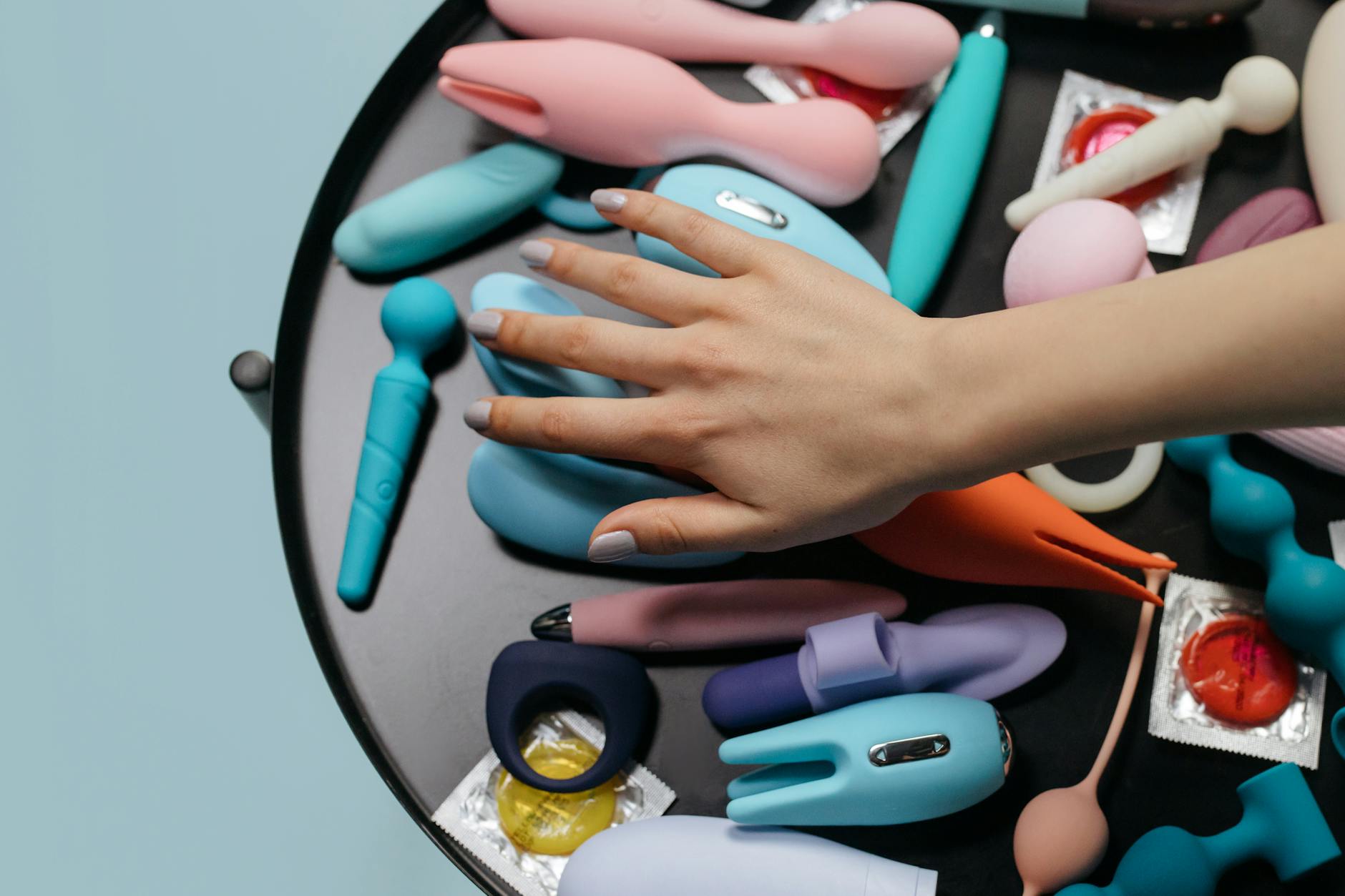
Here's what nobody tells you about coming back to pleasure
Healing isn't a line graph. It's more like a coastline. You get better, then you feel flat, then something shifts and you're better again, then inexplicably worse, then gradually steadier. Most guides to rebuilding intimacy or pleasure talk about the overall arc. They skip the part where you're three months into recovery and suddenly sensation vanishes for two weeks, and you panic because you thought you'd already fixed this.
You haven't broken anything. Your body is just healing at its actual pace, not the pace you scheduled.
Why recovery from pleasure loss isn't straightforward
There are about seven different reasons why pleasure might go missing temporarily. Sometimes multiple ones are happening at once.
If you're recovering from trauma or dissociation, your nervous system is learning to trust sensation again. That's not a switch. It's a gradual recalibration. Hormonal shifts (birth control changes, cycle timing, stress cortisol spikes) can flatten arousal for days or weeks without warning. Physical healing from surgery or illness has its own timeline, independent of how mentally ready you are. Relationship changes or emotional distance create a separate barrier. Medication adjustments, sleep deprivation, and baseline stress all suppress sensation independently.
The cruel part: these reasons don't announce themselves clearly. You just notice that what worked last week feels like nothing today.
What makes lemon vibrators different when recovery is messy
Most toys are designed for bodies that are already baseline aroused. They expect you to have some starting point of sensitivity to build from. Lemon vibrators use suction rather than direct vibration, which means they stimulate deeper nerve clusters without requiring your tissues to already be primed for sensation. If you're coming back from numbness, that's actually helpful.
The other advantage is gentleness on its own. You can start with the Lem on pattern one and barely feel it intentionally. That matters when your body is relearning pleasure slowly. There's no pressure to achieve anything or prove that you're "recovered." You're just checking in with what your body can feel today.
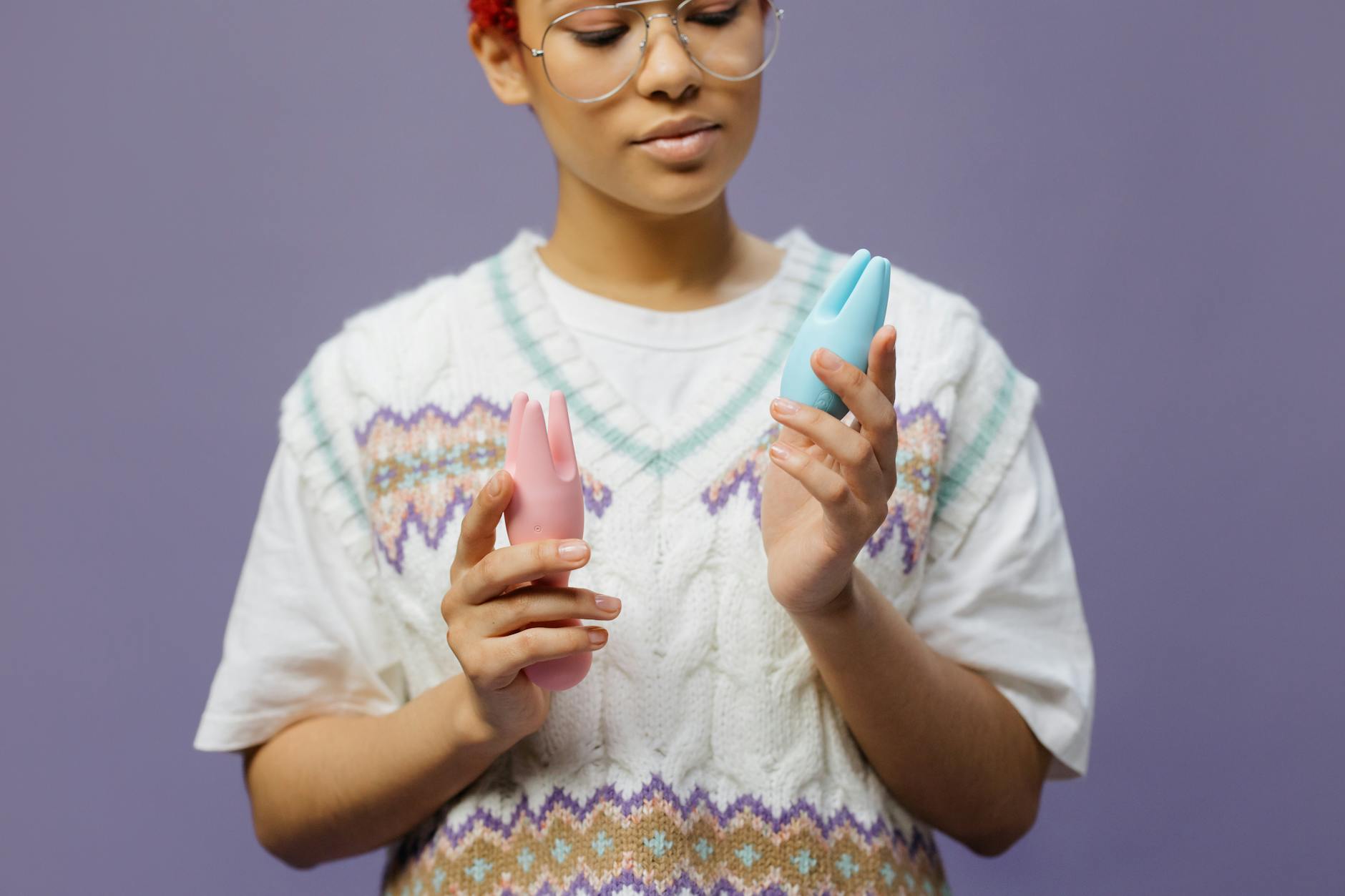
Photo by cottonbro studio on Pexels
Three patterns for uneven recovery
Pattern 1: The on-and-off week. Some days sensation is there, some days it's not. This is incredibly common after trauma recovery or major hormonal shifts. Don't interpret the flat days as failure. They're part of the process. When sensation is available, use it. When it isn't, don't force it. Your body knows something about what it needs today that you don't.
Pattern 2: The slow upward creep. You're gradually, unpredictably getting more sensation back. You'll have a day where you feel nothing, then three days later suddenly you can feel the difference between pattern 2 and pattern 3 on the Lem, which you couldn't before. These tiny shifts matter. That's progress, even if it doesn't feel dramatic.
Pattern 3: The plateau with occasional spikes. You reach a baseline of sensation, then stay there for weeks, then suddenly feel more. This usually means something shifted emotionally or hormonally. A stressful period ends. A relationship conversation clears something. Your cycle shifts. Then sensation opens up more fully. Document these spikes if you can. There's usually a pattern to when they happen.
The actual technique for slow recovery
Forget everything you've heard about "building up" to pleasure. That language assumes you're working toward a destination. You're not. You're checking in with your body right now, with whatever it can feel today.
Start with the intention of noticing, not achieving. Set maybe 10 or 15 minutes aside. Use water-based lubricant generously. Even if you feel like your body's responding, lubrication helps clitoral tissue stay comfortable during slower, exploratory stimulation.
Begin on pattern 1 of the lemon clitoral vibrator. If sensation is there, notice it. If it isn't, stay there for maybe a minute, then gently move to pattern 2. You're not looking for arousal. You're looking for awareness. They're different things.
Many people rebuilding sensation report that they feel something at patterns 3 or 4 even when patterns 1 and 2 feel like nothing. This isn't weird. Your nerve endings have different thresholds. Over weeks, the lower thresholds usually start waking up too. But right now, go where you feel something.
If you feel nothing across all patterns, that's information. Your body's telling you it's not ready today, or it needs something else. A longer warm-up, a different context, more emotional safety. Don't keep pushing.
Managing the emotional part of uneven recovery
This is where most people actually struggle. The fluctuation creates grief. You felt better, so you expected consistency, and now it's worse again, and suddenly you're questioning whether you've actually healed at all.
You have. Healing isn't a state. It's a direction. If you're mostly moving toward more sensation, more pleasure, more aliveness, you're healing. The flat weeks aren't regression. They're just part of the path.
If you have a partner, this is worth naming directly: "My sensation is coming back unevenly. Some days I can feel more, some days I can't. I'm not less interested. My body's just healing slowly." Most partners would rather understand the timeline than wonder if something's wrong between you.
When you feel that dread—"Will this flatness last forever? Am I broken again?"—reality-check it. Most plateaus last two to three weeks. You'll know within that window if something's shifted and needs a different approach. Usually, though, sensation quietly starts opening up again.
When to check in with a professional
If numbness or complete flatness lasts longer than a month, and you're not in an acute stress period or medication adjustment, it's worth talking to a therapist who works with sexual health. Sometimes recovery stalls because something emotional is still holding you back. A professional can help you identify what.
If pain appears during exploration, even when you're using a lemon clitoral vibrator gently, stop and talk to a pelvic health physical therapist. Pain is different from flatness. It means tissue's not ready yet, or there's something structurally that needs attention.
Otherwise, uneven recovery is normal. Your body's on its own timeline. The Lem is designed to work with that timeline, not against it.
Common questions about slow-return pleasure
How long does it typically take for sensation to fully return?
It depends on why it left. After trauma, it can be weeks to months. After medication changes, it's usually weeks to a few months. After relationship shifts or major stress, sometimes just a few weeks once the stressor lifts. There's no universal timeline. Some people regain baseline sensation within a month and then spend another month or two fine-tuning what feels good. Others take six months total. Both are normal.
Can I tell if I'm actually healing or just imagining improvement?
Yes. Real improvement shows up consistently. When you return to the same scenario (same time of day, same stress level, same pattern on the lemon vibrator), you feel roughly the same level of sensation. Imagined improvement is inconsistent. You feel something briefly, then it's gone, and you can't replicate it. Real healing has a direction.
Is it bad to use a vibrator when you're not feeling much?
No. As long as there's lubrication and you're not in pain, gentle exploration is fine. You're not "wasting" sensation or "wearing yourself out." You're doing the opposite. You're reminding your nervous system that sensation is safe and available. Regularity matters more than intensity during recovery.
What if my recovery has plateaued for months and nothing's changing?
Then it's worth checking three things. One: is something emotional still unresolved? Has there been a conversation you're avoiding, or a boundary that needs setting? Two: has your medication, stress level, or sleep changed? Those affect sensation independently of emotional healing. Three: is there a physical issue—pelvic floor tightness, hormonal imbalance, or tissue changes—that needs professional assessment? Sometimes the plateau lifts once one of those things shifts.
Does using lemon vibrators "train" your body to need them?
No. The Lem is a tool for exploring sensation, not a crutch. People rebuild pleasure and then move fluidly between using tools and partnered touch and solo touch. Your body doesn't become dependent. It just learns that sensation is available again.
How do I know when I'm truly recovered and this phase is over?
When sensation returns predictably and consistently. When using a lemon clitoral vibrator (or partnered touch, or solo touch) creates roughly the same experience most of the time. When you stop checking in anxiously to see if it's still there and just trust that it is. That's not the end of healing. It's the point where you stop actively recovering and start living again. The difference matters.
The patience part
Recovery when it's not linear asks something specific of you. It asks you to stay present with the pace your actual body has, not the pace you want it to have. That's genuinely hard. But lemon vibrators make this easier because they don't demand anything. They just offer gentle stimulation when your body's ready to feel it. You set the pace. You decide the duration. You choose what patterns work. There's no deadline, no performance, no right speed.
Healing moves faster when you're not fighting it. And right now, fighting it would mean expecting linearity. The acceptance that recovery is messy, slow, and full of unexpected flat weeks is when the real progress usually starts happening.