Let's talk about what anxiety actually does to your body
Anxiety doesn't just live in your head. It lives in your nervous system, and when you're operating from a place of chronic stress or even situational worry, your body goes into a low-level fight-or-flight state. Blood flow redirects. Muscles tense. Sensation gets muted.
Here's the part no one mentions: this directly changes how your clitoris responds to touch.
The physiology of anxiety and clitoral sensitivity
When you're anxious, your sympathetic nervous system (the gas pedal) dominates over your parasympathetic nervous system (the brake). This shift does three specific things that affect pleasure.
First, blood vessel constriction reduces engorgement in genital tissue. Your clitoris actually swells when you're aroused, bringing nerves closer to the surface and increasing responsiveness. Anxiety reverses this.
Second, your pelvic floor muscles tighten involuntarily. If you've ever noticed that you can't relax your pelvic floor even when you're trying, that's anxiety at work. A tense pelvic floor changes the angle of stimulation and can make sensation feel duller or even uncomfortable.
Third, the brain's arousal pathways get hijacked by worry. Even if your body is technically responding, your attention is somewhere else. You're thinking about work emails or that awkward thing you said three days ago instead of feeling what's happening.
The result: the same touch that felt incredible last week feels like nothing today.
Why this isn't a sign something's wrong with you
I work with people on this almost weekly. The pattern is always the same. A few good days, then anxiety spikes (deadlines, family stuff, even just the news cycle), and suddenly nothing feels like enough. The person panics, thinking their body is broken or permanently changed.
It's not. This is temporary. Your body is doing exactly what it's designed to do: prioritize survival when it perceives threat.
The trap is responding to variable sensitivity by abandoning pleasure altogether. You skip it because it feels unreliable. Then anxiety wins twice.over. Instead, you want a tool that works with anxiety's constraint, not against it.
How lemon clitoral vibrators work differently for anxious bodies
Traditional vibrators rely on your body doing half the work. They assume baseline engorgement is happening. If you're anxious and tissues are constricted, a standard vibrator can feel abrasive or ineffective.
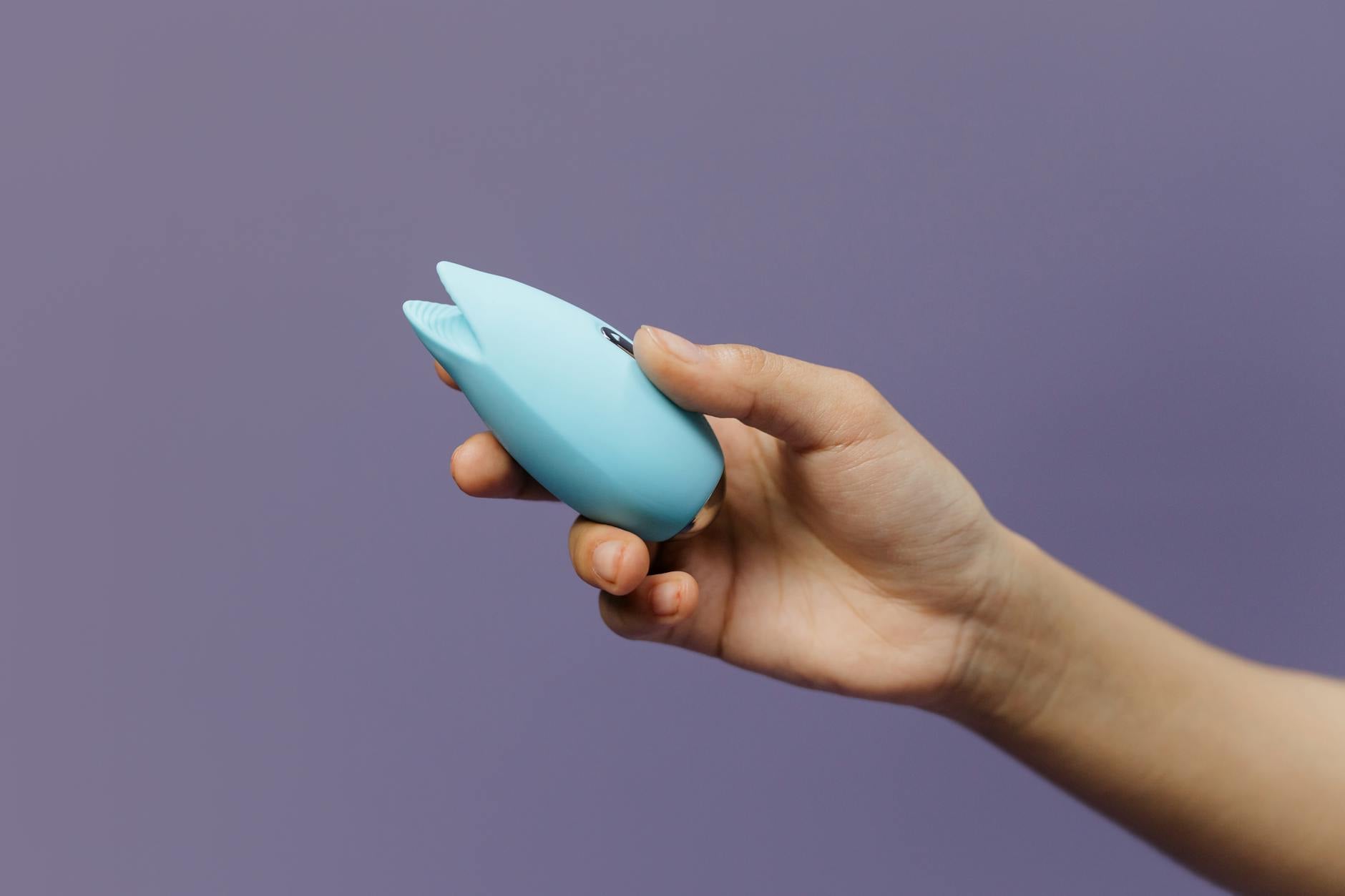
Lemon vibrators, including the Lem, use suction and pulsing patterns designed to stimulate nerve tissue without requiring deep engorgement. The suction mechanism works on a different neurological pathway than friction-based stimulation. It engages the nerve bundles in a way that bypasses some of the constriction anxiety creates.
Translated: a lemon clitoral vibrator can feel good on days when everything else feels numb.
Four strategies for using lemon vibrators during high-anxiety periods
Strategy 1: Lower expectations for intensity, raise expectations for consistency.
On an anxiety day, your goal isn't a transcendent orgasm. It's sensation. It's presence. Your Lem on pattern 2 might feel better than your Lem on pattern 5, even though normally pattern 5 is your sweet spot. This is information, not failure.
Let your body lead. If pattern 1 feels right, stay there for 10 minutes. Don't upgrade to a higher setting because you think you should. Get comfortable with the idea that good days and anxious days have different tactile languages.
Strategy 2: Extend the warm-up window.
Anxiety compresses your timeline. You expect pleasure to arrive on schedule. It won't. Budget 20 to 30 minutes instead of 10.
Start with your lemon vibrator on the lowest setting and spend the first 5 to 10 minutes just getting familiar with the sensation. This does two things. It gives your nervous system time to downshift from fight-or-flight to rest-and-digest. It also lets you track what your body actually wants instead of what you think it should want.
Strategy 3: Pair your lemon vibrator with a breathing practice.
Breathing directly signals your parasympathetic nervous system. Box breathing (inhale for 4, hold for 4, exhale for 4, hold for 4) synced with your Lem creates a feedback loop. As you breathe, your pelvic floor relaxes. As your pelvic floor relaxes, sensation increases. You're literally coaching your body down from anxiety.
This isn't meditation nonsense. This is neurology.
Strategy 4: Use your lemon vibrator as a grounding tool, not just a pleasure tool.
When anxiety is high, you're dissociated from your body. Using your Lem becomes a way back into your body. Focus on texture, temperature, pressure. Not on outcome. This reframes the entire experience from performance to presence.
Many people find that on anxious days, this reframing is more valuable than the orgasm itself.
The communication piece (if you have a partner)
If you're in a relationship, your partner needs to understand that anxiety changes your pleasure map without changing your desire. You want them. Your body just needs a different approach on high-stress days.
This is worth naming explicitly. "When I'm anxious, my sensitivity changes. Here's what helps" is a conversation that prevents resentment and guesswork. Some couples find that using a lemon vibrator together, with explicit attention to the partner's breathing and presence, actually deepens intimacy on the days when anxiety feels most isolating.
When to get additional support
If anxiety is interfering with pleasure most days, not just occasionally, talk to a therapist or doctor. Chronic anxiety that's reshaping your sex life is worth treating. Therapy (especially EMDR or somatic therapies), anxiety medication, or both can help recalibrate your nervous system over time.
Your lemon vibrator is a tool for managing the symptoms. Professional support addresses the root.
FAQ: Lemon vibrators and anxiety
How long does it take for sensitivity to bounce back after an anxious period?
Typically a few days to a week once the stressor passes. Your body is resilient. As anxiety decreases, blood flow returns, muscles relax, and your baseline sensitivity comes back. You don't need to do anything except wait and be patient with yourself.
Can using a lemon vibrator on an anxious day actually make anxiety worse?
Not if you shift your goal from orgasm to presence. The problem arises when you use your Lem with the same performance expectations as a good day. That breeds frustration, which feeds anxiety. Reset your expectations first.
Is there a "best" lemon vibrator pattern for anxious bodies?
There's no universal pattern. Some people find pulsing rhythms calming, others find consistent suction more grounding. Experiment on a calm day so you've mapped your preferences before anxiety hits. This gives you a playbook when stress arrives.
Should I avoid pleasure altogether on high-anxiety days?
No. Avoidance usually increases anxiety by adding shame and isolation. Using your lemon vibrator as a form of self-care and body reconnection is exactly what helps. Just recalibrate your expectations.
How do I talk to a partner about my sensitivity changing with anxiety?
Be specific and non-defensive. "When I'm stressed, my sensitivity shifts. It's not about you or how I feel about you. Here's what helps me feel good on those days." Then show them. Let them see how you use your lemon clitoral vibrator on a calm day versus an anxious day. Partnership means adapting together.
Can anxiety sensitivity changes ever become permanent?
Self-perpetuating patterns can form if anxiety becomes chronic and untreated. But the sensitivity shift itself isn't permanent. You might build habits around avoiding pleasure, which then feels permanent. That's why getting support for the anxiety itself matters so much.
The bigger picture
Your body isn't broken when anxiety changes your sensitivity. It's responding appropriately to what it perceives as a threat. The tool that works is one that meets your nervous system where it actually is, not where you wish it was.
Lemon vibrators do this better than most because they work with constraint rather than requiring engorgement to function. You deserve pleasure on both the good days and the hard days. That's what a lemon clitoral vibrator is here for.
If you're navigating ongoing sensitivity shifts, how lemon vibrators help when sensation feels numb or disconnected covers broader dissociation strategies that pair well with anxiety-specific approaches. And if anxiety is tangled up with stress and fatigue, using lemon vibrators with low libido from stress and fatigue digs into that overlap.