The thing nobody tells you about slower arousal
Your body takes 20 minutes to warm up instead of five. You used to feel ready instantly. Now you need time, more touching, a different rhythm. And somewhere along the way, you started thinking this was broken.
It's not. Slower arousal is one of the most common shifts I see in my practice, and it shows up for a hundred different reasons. Age, medication, stress, hormonal shifts, relationship patterns, or just your nervous system saying "I need more before I can open." None of these are malfunctions.
But they do change how pleasure works. And that's where lemon vibrators come in. Not to force arousal, but to meet your body where it actually is.
Why traditional methods fail slower arousal
Here's the mismatch: most vibrators are designed for someone already halfway to arousal. They work fast, they hit hard, and if your body isn't primed, they feel like too much too soon. You end up pushing yourself into intensity you're not ready for, which doesn't feel good and makes the next time harder.
Or you wait for arousal that takes 20 minutes to build naturally, and by the time you're ready, you're tired or the moment has passed.
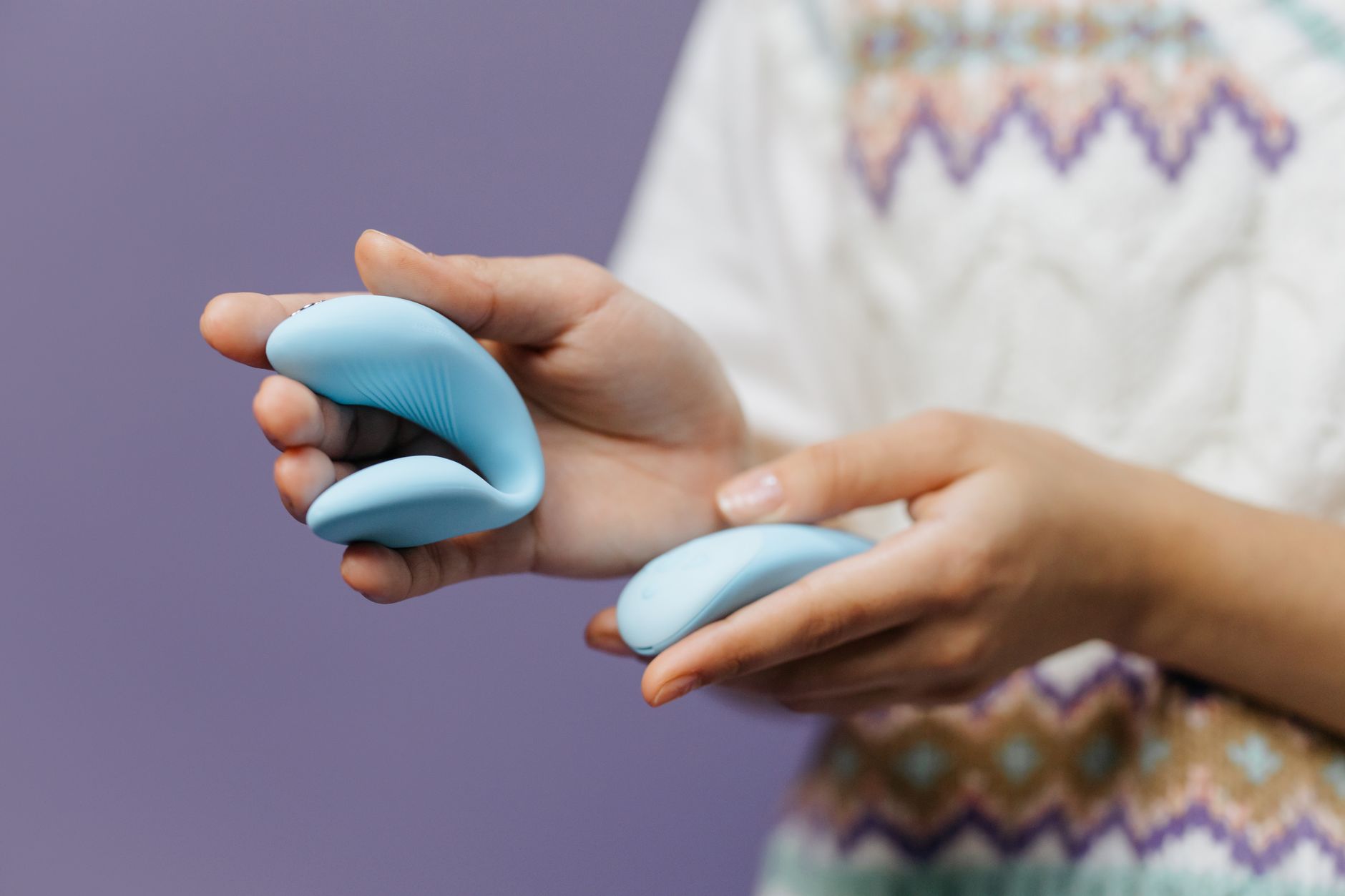
Lemon clitoral vibrators work differently. The suction mechanism is designed to stimulate without requiring your body to be completely ready. You can start at a low pattern and let sensation build gradually. It's not pushing your system into gear. It's inviting your arousal to unfold at its own pace.
The warmup sequence that actually works
I recommend a four-stage approach with a lemon vibrator:
Stage 1: Sensation only (5-10 minutes). Start with your lemon vibrator on the lowest pattern, 1 or 2. Don't think about arousal yet. Just feel the sensation. This isn't foreplay toward an orgasm. It's a conversation with your body: "We're awake. We're noticing things."
Stage 2: Slow increase (5-8 minutes). Move to pattern 3 or 4. You might notice your breathing change, your attention narrow, your body settling into the experience. This is arousal starting, but without the pressure to perform.
Stage 3: Exploration (5-10 minutes). Stay at this intensity or move up slightly. Experiment with angle, pressure, rhythm. What feels different today? This is where you learn your body's current language instead of forcing it into an old script.
Stage 4: Building (5-15 minutes). Increase intensity when you're ready, not before. Many people find that this slow build creates fuller, deeper orgasms because the entire pelvic floor has time to engage, not just the surface nerves.
Total time: 20-45 minutes. That sounds long until you realize it's actually shorter than waiting passively for arousal that might not come, then getting frustrated.
Why the waiting trap destroys slower arousal
Here's what I see happen: someone with slower arousal tries to "get ready" by lying there thinking sexy thoughts. After 15 minutes of nothing, they give up. Next time, they're anxious about whether arousal will show up. Anxiety kills arousal. Cycle repeats.
A lemon vibrator breaks this. You're not waiting. You're doing. There's input, sensation, something happening. This tells your nervous system it's actually safe to relax and respond, not a performance you might fail at.
This is especially true if your slower arousal comes from stress or a medication like an SSRI. Your system isn't broken. It just needs help crossing the threshold into activation. The lemon clitoral vibrator doesn't force anything. It provides consistent, predictable input that your body can respond to without pressure.
The partner conversation if you're not alone
If you're with someone, the biggest mistake couples make is trying to speed up your arousal instead of matching it. They add more intensity, more touching, more everything. This usually backfires.
What works: tell your partner exactly what I just wrote. "My arousal takes time now. That's not something you can rush. But here's what helps." Then show them how the lemon vibrator works with your timeline.
Many partners actually love this. It removes the pressure from them to "make you ready" and gives them clear feedback about what's working. Some join in. Some give you space and time. Some do both depending on the day. The key is stopping the pretense that your arousal should match their speed.
Solo pleasure with slower arousal
Honestly, this is where lemon vibrators shine. When you're alone, there's no performance clock. No one watching to see if you "make it" in a certain timeframe. You can spend 30 minutes on stage 1 and 2 if that's what your body needs.
Many of my clients actually find that solo time with a lemon clitoral vibrator becomes the place where their arousal rewires itself. Once they experience what 20-minute-slow-build orgasms feel like, their whole relationship with pleasure shifts. Suddenly slower isn't a problem. It's just different.
And different can be richer. I've had clients in their forties and fifties report that they've never had orgasms like the ones they're having now, with their body on its own timeline and a tool that actually meets them there.
When medication or hormones are the culprit
If your arousal change came after starting a new medication or a hormonal shift, a lemon vibrator helps but isn't the whole answer. Talk to your doctor.
SSRIs, some blood pressure meds, and hormonal changes do genuinely affect arousal. This isn't in your head. But there are sometimes adjustments you can make. Maybe a different medication. Maybe a lower dose. Maybe nothing changes and you adapt with better tools.
A lemon clitoral vibrator is an excellent adaptation tool. But you deserve to know if there's also a medical option worth exploring.
The pacing question: how often, how long
There's no rule here. Some people use their lemon vibrator several times a week and find that their arousal gets faster with practice. Others keep their slower pace and just enjoy the extended experience. Both are fine.
If you're trying to determine what's normal: slower arousal isn't about never reaching pleasure. It's about time. If 20 minutes of consistent stimulation gets you there with a lemon vibrator, you're not broken. You're just on a different rhythm.
What actually changes when you stop fighting slower arousal
The biggest shift I see is relief. People stop thinking their body is wrong. They stop measuring themselves against old baselines or comparing to partners. They use a lemon clitoral vibrator as a tool that works for their timeline, and something releases.
Orgasms often get stronger. Pleasure becomes more accessible, not less. And weirdly, arousal sometimes starts coming faster once you stop treating slowness like a failure.
I can't promise that will happen for you. But I can tell you it happens often enough that I've stopped being surprised by it.
FAQ: Slower arousal and lemon vibrators
How long should I actually wait before using a vibrator if arousal is slow?
Don't wait. Start immediately. The lemon vibrator IS your arousal tool. You're not waiting for your body to be ready before you introduce it. You're using it to help your body transition into pleasure. Starting with lower patterns on a lemon clitoral vibrator doesn't skip the buildup. It IS the buildup.
Can slower arousal mean I have lower desire?
Not necessarily. Slower arousal and lower desire are different things. You might have perfectly healthy desire and still take 20 minutes to warm up physically. If you actually want pleasure and you're willing to invest the time, arousal is just taking a different path to get there. A lemon vibrator helps because it shortens the gap between wanting pleasure and feeling it.
Will using a lemon vibrator make arousal even slower?
No. If anything, consistent use often speeds it up. Your body learns that stimulation is coming. Your nervous system doesn't have to work so hard to cross the threshold. Many people find their arousal gradually gets faster with practice, even if it never goes back to their old timeline.
What if my partner thinks slower arousal means I'm not into them anymore?
Time to have a real conversation. Arousal changes for tons of reasons that have nothing to do with attraction or desire. Medications, stress, age, hormonal shifts, being tired from work. Your partner's feelings are valid. Your body's timeline is also valid. The question is whether you're both willing to adapt together. A lemon vibrator can actually help here because it demonstrates that pleasure is still possible. It's not about lack of desire. It's about a different pathway.
Can slower arousal be permanent?
Sometimes. Or it can shift again. But permanent doesn't mean problematic. Plenty of people have slower arousal for years and find it's actually more satisfying than their faster baseline was. The goal isn't to go back to how it used to be. It's to find what works now.
Should I tell new partners about slower arousal before we have sex?
Yes, eventually. Not on date one. But if things are moving toward physical intimacy, a simple "I need more time to warm up" or "Arousal takes a while for me now" removes so much unnecessary confusion. A lemon clitoral vibrator can be part of that conversation or completely separate from it. Either way, honesty about your body helps everything work better.
The real difference a lemon vibrator makes
It's not that it forces arousal faster. It's that it removes the gap between wanting pleasure and experiencing it. You don't have to wait for your body to be ready. You start the journey, and the journey itself becomes the arousal.
If you're dealing with slower arousal, the question isn't whether there's something wrong with you. The question is whether your current tools are actually designed for the timeline your body has now. Most aren't. Lemon vibrators are. That's the whole difference.
Need more guidance on finding the right approach for your body? Get in touch with our team.