Here's the thing nobody warns you about before they hand you an antidepressant prescription
Antidepressants work. They genuinely do. They lift depression, ease anxiety, and give you back your capacity to function. And then you sit down to have sex and realize you can't feel anything. Or you feel plenty, but orgasm has become a distant theoretical concept. Or worse, you've lost interest entirely. This isn't a personal problem. It's a pharmacological one.
It's also wildly common. Up to 60 percent of people on SSRIs (selective serotonin reuptake inhibitors) report some form of sexual dysfunction. That's not rare side effect territory. That's statistically normal. And because nobody talks about it until you're already prescribed, most people assume they've broken something about themselves. They haven't.
Why antidepressants numb sexual response in the first place
Your brain's pleasure centers run on dopamine and norepinephrine. Antidepressants, especially SSRIs like sertraline and fluoxetine, prioritize serotonin signaling. That rebalancing helps depression, but it accidentally dampens the neurotransmitters involved in arousal and orgasm. You're not less capable of pleasure. The electrical signal to your clitoris is just turning up quieter.
This also affects the sympathetic nervous system, which is what revs you up toward orgasm. When serotonin rises, that revving mechanism gets muted. Your body is literally slower to respond.
The irony is thick: antidepressants heal the mental part of your sexuality (the shame, the rumination, the flatness of depression) while simultaneously blocking the physiological part. So you want sex more, but your body's not cooperating.
Why standard vibrators don't cut it when you're medicated
A conventional vibrator works by sending steady vibration through tissue. If your nervous system is already dampened, you need more stimulation volume to cross the threshold into sensation. Most people just turn up the intensity and hold on.
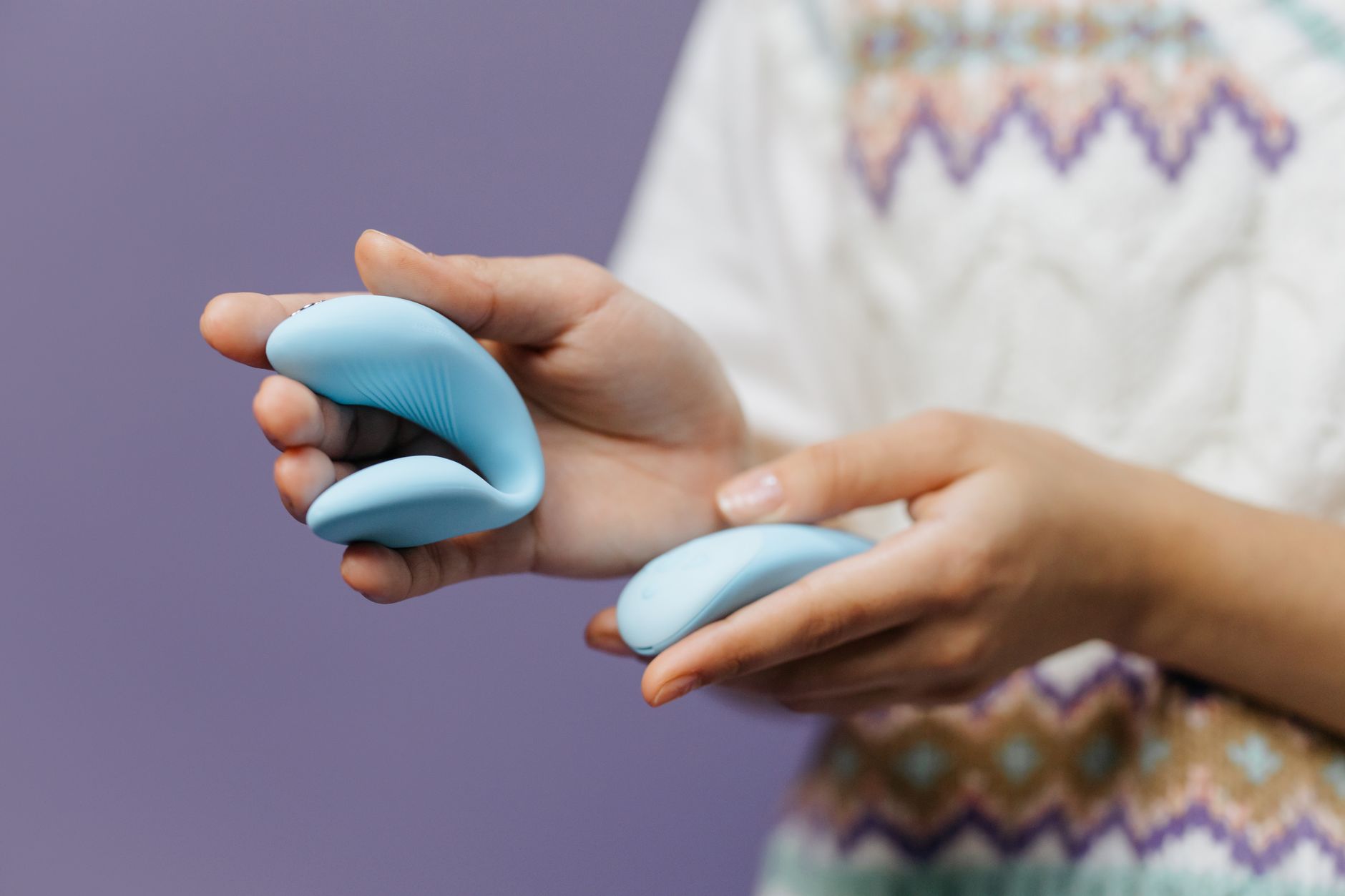
But here's what's different about suction-based clitoral vibrators like the Lem. Instead of relying on vibration alone, they use air-pulse suction to create a sealed micro-pulse of pressure and release. This mimics the kind of stimulation pattern that research shows bypasses some of the serotonergic dampening.
It's not magic. It's frequency. Suction engages a slightly different sensory pathway than traditional vibration. For many people on antidepressants, that different pathway is the difference between numb and present.
What actually changes when you switch tools
People often describe the sensation of a lemon clitoral vibrator as more diffuse and building than sharp. That matters when your system is dampened because it takes advantage of the sensation you can actually feel. You're not fighting against numbness with more force. You're working with a pattern that your nervous system can register.
The Lem, for example, works in patterns from gentle waves to more intense pulses. When you're on antidepressants, starting at the gentler settings and letting the suction build momentum often works better than immediately going hard. This gives your nervous system time to calibrate and respond.
Many of my clients report that they need to shift their mental approach too. Pleasure during medication-induced dampness is slower. It's less like a sprint and more like a steady climb. That's not worse. It's just different. Accepting that difference, rather than trying to force the old experience back, is half the battle.
The role of mental arousal when your body's lagging
Here's something antidepressants absolutely don't numb: your imagination. Your fantasies work fine. Your brain's capacity for desire stays intact. When the body's having trouble crossing the finish line, mental stimulation becomes your best friend.
This is why the quality of your headspace matters more than ever. Distractions kill what little momentum you've built. A partner who understands you're not less interested, just slower to respond, changes everything. And if you're solo, giving yourself permission to use porn, erotica, or whatever gets your mind going isn't cheating the system. It's actually working with your neurochemistry.
Some people find that combining a lemon vibrator with audio erotica or visual material that lands for them personally works way better than the toy alone. The vibration handles the physical signal, and the mental input stacks on top of it.
Timing, dosing, and talking to your doctor
Antidepressant sexual dysfunction isn't permanent, and it's not something you have to live with unchanged. Your prescriber needs to know you're experiencing this. Real conversations, not hints.
Sometimes a small dose adjustment helps. Sometimes switching to a different medication in the same class (like bupropion, which works on dopamine instead of serotonin) changes the equation entirely. Sometimes adding another medication temporarily to counteract the sexual side effect is actually the right call.
The important part is knowing that these options exist. And knowing that investing in tools like a high-quality lemon vibrator isn't settling. It's meeting your body where it is while you and your doctor figure out the medication puzzle.
Timing also matters tactically. Many people on SSRIs find that taking their medication right after sex, rather than before, helps preserve responsiveness. Your doctor can advise whether that's safe for your specific prescription. Some medications require consistent timing. Others have more flexibility.
Rebuilding sensation when numbness has been your baseline for months
If you've been numb for a long time, your system may need a gentle reintroduction to sensation. This isn't about forcing pleasure. It's about waking up the neural pathways that have been quiet.
Start with lower settings on a lemon clitoral vibrator and spend time just feeling, without the goal of orgasm. This sounds counterintuitive, but it works. When you take the performance pressure off and just explore what you can feel, sensation often comes back faster than if you're white-knuckling toward a finish line.
Some people also find that combining tools helps. A lemon vibrator plus a partner's touch, plus mental arousal, plus low-pressure time away from screens. The more sensory channels you engage, the more likely the signal gets through.
When to consider medication changes
Not every form of sexual dysfunction from antidepressants is tolerable long-term. If you've adapted, tried different tools, optimized your approach, and pleasure is still completely inaccessible, that's worth bringing back to your prescriber.
There are alternatives. Bupropion, for instance, works differently and causes sexual side effects in fewer than 10 percent of people. SNRIs like venlafaxine sometimes have a different profile than SSRIs. Augmentation strategies exist too. The point is you don't have to choose between mental health and sexual response.
What you probably don't need to do is quit antidepressants entirely. The risk of depression returning usually outweighs the cost of adapting your sex life. But the adaptation itself should never feel like a permanent loss. It's a phase, and it's solvable.
The emotional layer nobody talks about
Beyond the biology, there's grief in this. You had a sexual response that worked, and then medication took it. That loss is real, even if it's also necessary for your survival.
For couples, this can strain connection if you're not careful. A partner might feel rejected if sex becomes slower or requires different tools. You might feel broken or unsexy. Neither of those interpretations is true, but both are understandable.
The conversation that helps: "My medication is saving my life. My body's response is slower now because of how it works. That doesn't mean I don't want you. It means we need to adjust our approach." Specific and honest beats vague and resentful.
Using tools like a lemon vibrator becomes a shared experience then, not a workaround for a problem. It's how you and your partner (or you and yourself) are connecting right now.
FAQ
Can clitoral vibrators like the Lem actually work when antidepressants have completely killed sensation?
Most people report at least some return of sensation with the right approach and tool combination. Complete sexual anhedonia is less common than dampened sensation. If you're experiencing total numbness, that's worth discussing with your doctor as a possible medication change indicator. With that said, starting with a suction-based vibrator and giving yourself time often helps even when conventional vibrators felt useless.
Should I take my SSRI at a different time to preserve sexual response?
That's a question for your specific prescriber, since timing rules vary by medication. Some can be moved without issue. Others need consistent timing to stay effective. What we know generally is that taking medication after sex rather than before sometimes helps, if your doctor says it's okay. Never shift timing on your own.
Is switching antidepressants just to fix sexual dysfunction a good idea?
Not on its own. Switching medications is a big decision that affects your whole mental health picture. But if sexual side effects are severe and other adaptations aren't working, it's absolutely worth exploring with your psychiatrist. Medications like bupropion have lower sexual side effect rates. The risk-benefit calculation is worth doing with a professional.
How long does it usually take for sensation to come back if I adjust my medication?
It depends on which antidepressant you were on, which you're switching to, and your individual neurology. Some people notice change within weeks. Others take two to three months. Your body's nervous system is recalibrating. That takes time. Patience is the actual treatment here.
Can I use a lemon vibrator safely with my antidepressant, or will it interact?
There's no pharmacological interaction between an external vibrator and any antidepressant. Safe use of a tool is a mechanical and sensory question, not a chemical one. What matters is following the manufacturer's care guidelines and listening to your body if anything feels off. That said, some people find certain intensity levels trigger anxiety. Start gentle and build from there.
What if my partner thinks using a vibrator means I don't want them anymore?
It doesn't. And that's a conversation worth having directly. Many couples find that adding a tool like a lemon vibrator actually improves their sex life because it takes pressure off the partner to be everything. It becomes something you do together, not something you're doing to replace them. You might say: "I want to share this with you. It's not about replacing you. It's about both of us having better pleasure together."